In the early years of our parenting journey, with four children under five, Bible reading became part of the infamous “bedtime routine”. Since we were reading picture books anyway, illustrated Bible storybooks were an easy addition. We had a number of different story Bibles on the go, and our children devoured them with enthusiasm, often reenacting the scenes with a lot of noise. It was fun, even if it was sometimes chaotic!
Then came the dreaded transition. As each child reached the age of six or seven, we realised it was time to move away from story Bibles and introduce them to the Good Book itself. The contrast felt overwhelming. From big, bold writing to tiny letters on flimsy pages; from bright and colourful illustrations to just a few black-and-white maps at the back. How were we going to help our children make the move from story Bibles to the real deal without losing their interest or enthusiasm?
How were we ever going to convince the children of our conviction that it was actually this book that was the really exciting one?
Here are six things we found worked for our family that I hope will help you too!
We have always been big on celebrations in our home—we’ll find any excuse to throw a party! So, we decided to turn the moment when our children received their first proper Bible into a celebratory rite of passage. We allowed them the freedom to choose their own edition, picking out the cover, colour and style they liked (although we did direct them to specific translations—more on that later). Each one of them took this decision very seriously and enjoyed browsing the shelves of the bookshop—picking up, flicking through and carefully choosing the Bible that would be “theirs”.
After years of sharing story Bibles with their siblings, this felt truly special. It was their first real “adult” book, and each one of them walked out of that bookshop a little bit taller. They were ready for the challenge of moving to the real Bible!
Of course, it was crucial for our children not just to feel pleased with their newly acquired Bibles but to feel they could understand them. So, we settled on the NIV as the right translation for our kids.
Why? Firstly, the NIV does a pretty good job at balancing the need for clarity and easy-understanding with robust translation and interpretation. It is accurate while also being readable, and for young children, this was important for us.
Secondly, the NIV was the translation that our church used. This was important because we wanted the children to be able to follow along with the Bible reading in church and see that what we were covering in the sermons was straight out of God’s Word.
Thirdly, most children’s resources in the UK assume use of either the NIV or the Good News Bible. We simply wanted things to be straightforward!
Your choice may be different, but it is worth thinking through how you can make the transition from storybooks to the real Bible as easy for your child as possible.
My sister has recently had some building work done. For the last few months, her home has been hidden under a web of scaffolding which helps the builders to safely reach all the areas they need to. Without it, they’d have been unable to begin their work.
In the same way, we can’t just hand our children a Bible and say “off you go”—we need to put scaffolding up to help them access their new Bible for themselves.
I didn’t want to spoon-feed my children the Bible: I wanted them to be the ones exploring it. But I wanted to give them help to support them to do that, giving them clues and asking questions at the right level for them to be able to answer.
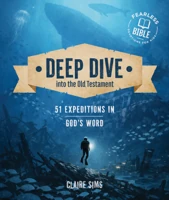
A good printed resource is worth its weight in gold in providing this scaffolding and helping our children take ownership over their Bible reading. This is one of the reasons I wrote my book Deep Dive into the Old Testament. I wanted to create a resource for children that would really get them exploring the Bible for themselves—in particular, making the discovery that the Bible isn’t primarily about us but about God, who he is and what he’s done, and seeing what that means for our lives. My aim in writing was to put the scaffolding in to support kids in doing that, asking key questions and steering them to find answers in Scripture in an engaging way.
One of the key ways we have scaffolded for our children over the years is to use five consistent questions. We have found these questions to be useful in any book of the Bible, and they have helped us get a clear grasp on how to understand the passage we’re looking at. Here they are:
When our children were very small, we focussed primarily on question 2: what does this passage teach me about God? From the youngest age, with this simple question, we were giving our children a crucial key to life—the truth that it’s as we get to know our Creator God that we understand who we are and how we fit into his plan! It’s an exciting discovery, and has given us plenty of opportunities over the years to dig deep into God’s character as we’ve read the Word together.
We are all creatures of habit, even from the youngest age. Finding consistency in our Bible-reading habits is as helpful for our little people as it is for us adults.
We have encouraged our children to find a “special spot”, a place where they can enjoy meeting with Jesus every day. It might be their bed, a favourite chair or even a beanbag! Why don’t you try it and see what your children choose?
Alongside this, think practically together about when might be the best time to build this into your daily routine as a family. There is great benefit to poring over God’s Word first thing in the morning, but with early school starts and tight deadlines, this may not be practical. Perhaps having their Bibles ready at the breakfast table, over morning baskets, or at bedtime might work for you. There are no rules—but consistency is helpful and builds healthy habits, so think it through together and make a plan.
Finally, gathering useful equipment and having it ready to go is helpful. For years, our kids have had their own little zipper pouches which hold a Bible, a Bible-study resource, a pen and some highlighters. It has meant that every day they can just pick it up and go—they don’t waste time hunting down what they need.
Last but definitely not least, pray! Our hearts’ desire is for our children to love the Word of God… and for him to transform them by his Spirit.
Moving from story Bibles to the real deal isn’t about switching out something fun for something less so—it’s about moving from the shallows to the depths. It might seem intimidating, but with it comes a whole lot more opportunity for adventure and exploration as we dive deep together into the living Word of God.
Claire Sims is a wife, mother of five and former schoolteacher and Christian schools worker. A member of King's Church Chessington in south-west London, she regularly leads women’s Bible studies and volunteers in a local primary school. She loves being creative and teaching children about Jesus! Find Claire's family discipleship ideas and more Bible resources on her Instagram account @gathergospelgrowco.