.jpg)
What is the meaning of life? It’s the question that sits at the very heart of our existence. Most of us have asked it. Some of us have tried, unsuccessfully, to answer it. And then there are those select few—the arrogant ones—who claim they’ve cracked the code.
Guess what? I’m one of the arrogant ones. The worst kind, in fact—the guy who writes a book and says, “You can discover the secret, too." A motivational-speaking, pyramid-selling, self-exalting guru.
Hopefully not. But I am, with hand on heart, telling you that I do believe I’ve found the answer to this question. Not with a sense of arrogance—it has nothing to do with any supreme intellect I may possess. Rather, it’s a confident boast in a promise that comes from God himself.
When Jesus is asked by a Pharisee what the greatest commandment is (Matthew 22:34-40), he famously declares that it is to love God and to love our neighbor as ourselves. But it’s the often overlooked following verse that is perhaps the most striking of all:
“All the Law and the Prophets hang on these two commandments.” (Matthew 22:40)
Jesus is doing something extraordinary here. He isn’t saying that love is the greatest command because it’s better than all the others. He’s saying it’s the greatest command because it encompasses all the others.
This is, I believe, Jesus’ answer for why we’re here in the first place. We’re here to love. Which begs the question, but “what is love?”
I guess you’ll have to buy my book to find that out. Maybe there is a bit of a pyramid seller in me after all! But for now, let me leave you with just one brief thought.
Humanity, it seems, is becoming increasingly tribal—at least by modern standards. I only have to point to the most recent US presidential elections, or the different opinions that swirl around Israel and Palestine, to make this claim.
But it isn’t just politics. In my home country of Australia, the wealth divide between rich and poor according to home ownership grows larger by the day. During Covid, I saw debates about the ethics of lockdowns and vaccines split even the closest families right down the middle.
And so, in an increasingly divided world—politically, economically, socially—what if Christians were to be known by their love of those they don’t necessarily agree with? We so easily confuse association with agreement. But Jesus shows us that love finds a better way.
“While Jesus was having dinner at Matthew’s house, many tax collectors and sinners came and ate with him and his disciples. When the Pharisees saw this, they asked his disciples, ‘Why does your teacher eat with tax collectors and sinners?’
“On hearing this, Jesus said, ‘It is not the healthy who need a doctor, but the sick. But go and learn what this means: “I desire mercy, not sacrifice.” For I have not come to call the righteous, but sinners.’” (Matthew 9:10-13)
Why does he eat with tax collectors and sinners?
Because they’re tax collectors and sinners!
Notice that Jesus doesn’t dispute the Pharisees’ claim. That is to say, he isn’t agreeing with or endorsing the decisions made by those he dines with. And yet, he associates with them. Why?
It’s his love that drives Jesus to associate with people precisely because he doesn’t agree with them. Not the healthy, but the sick.
If God himself can sit with the discomfort of dining with sinners, then surely his Church can sit with the discomfort of political, social or even denominational differences. We can, and should, associate with those we disagree with. And as we do, we might just unlock a difference in the Christian ethic that allows us to be the salt and light that we’re called to be.
To associate without agreement is a nuanced path. And it won’t always be understood by others. Jesus certainly wasn’t understood for it in Matthew 9. But God sees the heart.
As we pursue this vision, we uphold a love for God by sitting under his truth for the world, and at the same time we love our neighbor by meeting them with this truth precisely where they’re at.
And here’s the really exciting thing. If it’s true that all the Law and Prophets hang on these two commands, then this is just one of many, many iterations of what love might look like in our lives.
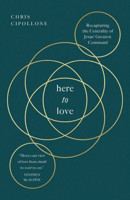
Explore the why and how of love as the driving force in the life of a Christian in Here to Love by Chris Cipollone, available here.

Chris Cipollone has a passion for bringing a deep and authentic faith to the everyday experiences of life. Originally training as a teacher, Chris went on to spend over a decade as a church pastor in Sydney, Australia. He is Founding Director of Life To The Full, a not-for-profit organization that aims to help people flourish in faith and life. He is the author of Down, Not Out: Depression, Anxiety and the Difference Jesus Makes.