
This is an extract from Timothy Keller’s latest title, Romans 1–7 For You. Launching on 4th February, you can pre-order it now.
Harvest Time in Rome
Paul didn’t just write a letter to the Roman church. He planned a trip to the Romans church, too: “… in order that I might have a harvest among you, just as I have had among the other Gentiles” (Romans 1:13).
This “harvest” likely has two aspects. Paul is hoping for a harvest within the Roman church; what Jesus pictured when he talked of people who had heard and accepted the word producing “a crop—thirty, sixty or even a hundred times what was sown” (Mark 4:20). But the next verses show that Paul also desires to reap a crop outside the church; what Jesus was talking of when he said to his followers: “The harvest is plentiful but the workers are few. Ask the Lord of the harvest, therefore, to send out workers into his harvest field” (Matthew 9:37-38). Paul is coming to Rome both to encourage and to evangelize.
Paul sees himself as “obligated,” to Greeks and non-Greeks, to wise and foolish; to everyone, no matter their ethnic background or intellectual capabilities (Romans 1:14). “Obligated” can also be rendered “indebted.” In what sense is he in debt to the inhabitants of Rome? It is illustrative to think about how I can be in debt to you. First, you may have lent me $100—and I am in debt to you until I pay it back. But second, someone else may have given me $100 to pass on to you—and I am in debt to you until I hand it on. It is in this second sense that Paul is “obligated” to everyone, everywhere. God has shared the gospel with him. But God has also commissioned him to declare it to others. So Paul owes people the gospel.
Setting verse 14 alongside verse 5 provides us with Paul’s motivation for his witness. First, it is “for his name’s sake” (v 5). The gospel declares that Jesus is the powerful, saving King. His status demands honor. His actions in dying and rising deserve honor. And he is honored as he is recognized as “our Lord.” It is for Jesus’ sake that Paul tells people the gospel.
But second, it is also for people’s sake. We will see who needs the gospel, and why, in the next three chapters of this book. But verse 14 gives us the sense of Paul’s burning desire to settle his debt by passing on the message of the gospel which God gave to him. It is his love and regard for Jesus, and his love and regard for people, which are “why I am so eager to preach the gospel also to you who are at Rome” (v 15).
We do not have Paul’s specific commission as apostle to the Gentiles. But we are still commissioned by the Lord to: “go and make disciples of all nations, baptizing them in the name of the Father and of the Son and of the Holy Spirit, and teaching them to obey everything I have commanded you” (Matthew 28:19-20). Why? “All authority in heaven and on earth has been given to [Jesus]. Therefore go…” (v 18-19).
Eager or Ashamed?
But in every age, it is possible to be “ashamed of the gospel” (Romans 1:16), instead of eager to share it. The word translated “ashamed” also means “offended.” The gospel is offensive because it tells us we cannot save ourselves; that we are not naturally good; that our way may not be right; that following a suffering Savior will mean suffering ourselves. Of course we will be tempted to be ashamed of the ashaming gospel.
Yet Paul is not ashamed of the shameful gospel—because ”it is the power of God” (v 16). Paul is often fond of contrasting “mere” words with power (see, for instance, 1 Corinthians 4:20). Paul is saying that the gospel is not merely a concept or a philosophy. In the gospel, words and power come together. The message of the gospel is what God has done and will do for us. Paul says that the gospel is therefore a power. He doesn’t say it brings power or has power, but that it actually is power. The gospel message is actually the power of God in verbal, cognitive form. It lifts people up; it transforms and changes things. When it is outlined and explained, or reflected upon, its power is released.
Theodoret, a Syrian bishop in the fifth century, likened the gospel to a pepper: “A pepper outwardly seems to be cold … but the person who crunches it between the teeth experiences the sensation of burning fire.” In the same way, he goes on, the gospel can appear at first like an interesting theory or philosophy. But if we take it in personally, we find it full of power.
What does its power do? It is the power of God “unto salvation” (Romans 1:16, KJV). The gospel’s power is seen in its ability to completely change minds, hearts, life orientation, our understanding of everything that happens, the way people relate to one another, and so on. Most of all, it is powerful because it does what no other power on earth can do: it can save us, reconcile us to God, and guarantee us a place in the kingdom of God forever.
This is what the gospel does, for anyone who believes. That is why Paul is not ashamed of it , but rather eager to proclaim it. And, as we remember and meditate on what the gospel is and what the gospel does and to whom we're obligated to share it, we will find ourselves becoming increasingly eager, too.
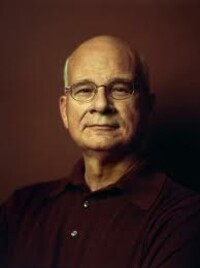
Timothy Keller was the Founding Pastor of Redeemer Presbyterian Church in New York City. He received his Master of Divinity from Gordon-Conwell Theological Seminary and his Doctor of Ministry from Westminster Theological Seminary. He wrote many New York Times best-selling books such as The Reason for God and Prayer. He was also Chairman of Redeemer City to City, which has helped start over 380 churches in global cities worldwide.