 The chances are that the majority of your church has a vague and possibly heretical view of God.
Yes, really.
A recent survey in a Bible-teaching church, committed to expository preaching for over a decade, in a very average part of the UK, discovered that:
To put it another way, only 16% were “orthodox” (meaning that they agreed with at least 5 of the 7 “orthodox” statements, and agreed with fewer than 4 of the 10 heretical statements—which is not a high bar for being “orthodox”!)
But the question is: Would you and I fare any better? Would our churches? Dare we even find out?! The uncomfortable truth is that we may well be churches who define ourselves as Bible-teaching—yet also be churches full of people who are not Trinity-believing.
Even if your church were twice as clear on the key doctrine of the Trinity as the one surveyed, it would mean that is Bible-teaching, but Biblical-doctrine-light.
Or, to put it more depressingly, your church can be Bible-teaching but not God-understanding, world-understanding, or self-understanding. After all, doctrine is simply the study of what is true as revealed in God’s word. Hazy doctrine leads to half-hearted lives.
DOCTRINE IS NOT A DIRTY WORD
One problem we have is that, for some reason, doctrine seems to have got a bad name. Doctrine has become seen as dry to look at, and irrelevant to life—something best left to the professionals, or to the people who like big, ponderous books.
We need to show that doctrine matters—that it can be accessible, and exciting, and applied, as well as theological.
We need to rescue doctrine. We need to show that it matters—that it can be accessible, and exciting, and applied, as well as theological. That these deep things are worth wrestling with because they enable us, as Becky Manley Pippert puts it, “to get to know God, this world and yourself much better… to live with purpose, grit and glory.”
We need doctrine to stop being a dirty word, and start being an indispensable one.
We need good doctrine, and we need it to be taught not only faithfully, but accessibly and relevantly, so that it becomes clear that doctrine is not for the seminary, but for the pew; and not for the ivory tower, but for real life.
We need good doctrine, and we need it to be taught not only faithfully, but accessibly and relevantly
Becky has aimed to do just that with her new five-week course, KNOW. Through Bible study, DVD talks, discussion and prayer, KNOW introduces Christians to key doctrines of the Christian faith: Trinity, Creation, Humanity, Sin, Redemption, and Consummation. Crucially, at each step, Becky shows how understanding these doctrines transforms the way Christians think, feel, and live—that doctrine makes a difference.
TAKE THE QUIZ (IF YOU DARE)
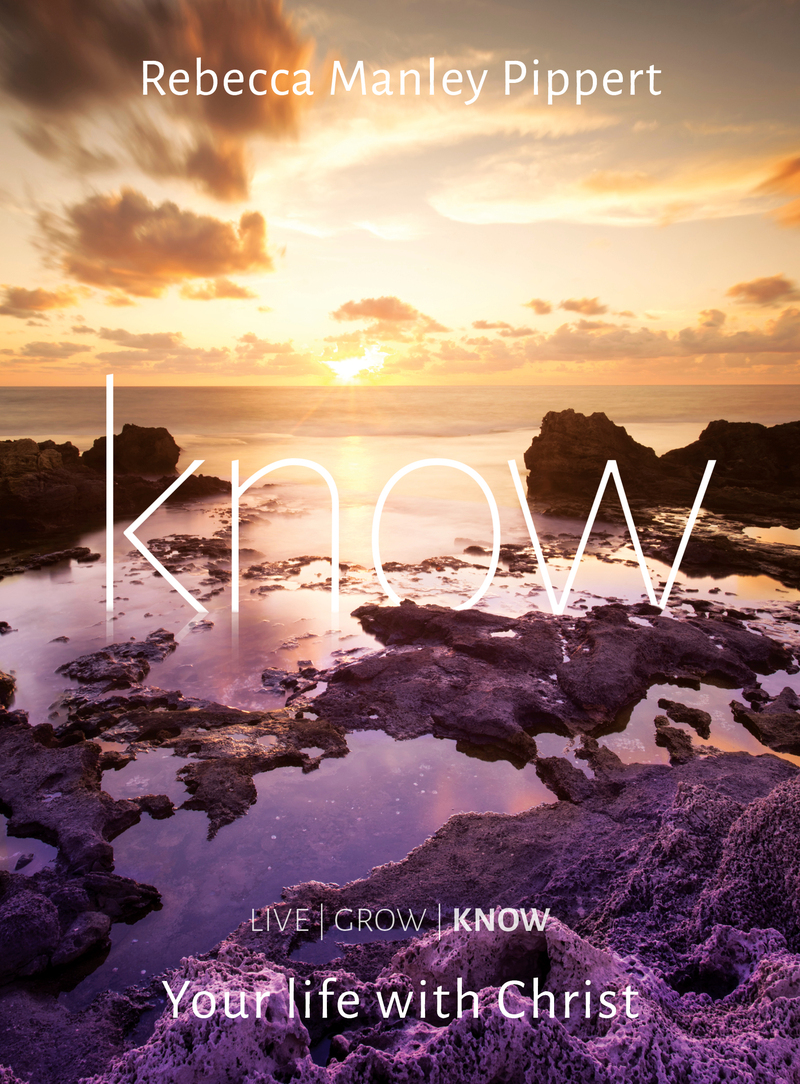 You can find out more about KNOW, and think through how you might use it in your church, here. And—if you dare—here’s the questionnaire that revealed the confusion about the Trinity, that you can print out and fill in yourself, and/or pass round your church members. Or you can take an online version of the questionnaire below.
The results may be surprising. And they might just encourage you to start your church’s journey to doctrinal clarity and excitement, by buying a copy of KNOW!
TRINITY QUESTIONNAIRE
When Jesus prayed in the Gospels, He was really talking to Himself.
When God/the LORD is mentioned in the Old Testament, it is referring only to God the Father.
Those who deny the Trinity are not true Christians.
There is one God, but he changes between different forms – Father, Son, and Holy Spirit – like water, steam and ice.
The Trinity is taught by the Bible.
The Trinity is like God wearing three different sets of clothes according to the job he’s doing at the time.
The Son of God was the first and most glorious of the Father’s creations.
The Father, the Son, and the Holy Spirit are three separate Gods.
The Father, the Son and the Spirit are equally ‘God’.
The Father, Son and Holy Spirit are the three parts of God.
The Father is not the same person as the Son, who is not the same person as the Holy Spirit, who is not the same person as the Father.
Since the Bible teaches that the Son is ‘begotten’ of the Father, there must have been a time when he began to exist.
It is alright to call Jesus Son of God, but not to call him God.
God the Father became a man and died for our sins.
God operated first as the Father in creation, then as the Son in redemption, and now operates as the Spirit in sanctification.
God has always existed in three persons.
Father, Son and Holy Spirit are to do with how we experience God, not to do with how God is in himself.
Each person of the Trinity thinks of himself as ‘I’ and the other persons of the Trinity as ‘You.’
Each of the Father, the Son and the Holy Spirit are eternal, all-powerful, all-knowing, all-present.
Now you've seen this post, let us know what you think. Comment in the box below. You can also like us on Facebook, follow us on Twitter, and subscribe to our YouTube Channel

Carl is Publisher and Co-CEO at The Good Book Company and is a member of Life Church Hackbridge in south London. He is the bestselling author of The Garden, the Curtain and the Cross and God's Big Promises Bible Storybook, and also serves as Series Editor of the God's Word For You series. Before joining TGBC, he worked as a journalist and then as a teacher, and pastored a congregation in Hull. Carl is married to Lizzie, and they have two children. He studied history at Oxford University.