Riding on the packed tube train that morning, my friend bent down to take something from his briefcase on the floor.
Then the world exploded.
That moment's action undoubtedly prevented him from being among the roll of the 52 people who died on the 7th July. Instead, he was one of the dazed and bewildered 700 who were injured on the day radical Islam made it's indelible mark on London ten years ago in 2005.
The minute's silence yesterday and the extensive media coverage are made against a worrying backdrop where terror alerts remain on high, and the emergency services are prepared and practised for a "major event" to take place any time soon.
In the years before The Good Book Company became my life's mission, I worked as a journalist, travelling extensively around the Middle East for twelve years. I met, talked with and made friends with scores of Muslims of all kinds, from Morocco to Iran; from Yemen to Northern Syria. I experienced first hand the complexity of life and politics; the shades and spectrums of Islamic belief and practice; the hidden tensions of everyday life—and also the slow and steady growth of the gospel in hidden corners.
Despite my personal experience and having read endlessly on Islam and Arab world politics, I only know enough to know that there will be no simple solution or easy outcome to the trajectory of Islamic militancy.
The latest sabre-rattling talk by British politicians to "do something positive" is likely neither to make things better or make us safer. You can cancel a passport, but you cannot eradicate an idea from a person's mind by voting on it in Westminster. But as this article suggests, there is something deeper going on here. The British Prime Minister wants us to rebrand ISIL and ISIS, either by calling it something else or by using the the phrase "so-called" every time it is used. He wants us all to draw a distinction between the activities of this terrorist movement, and Islam itself.
Positively, he wants to protect the reputation and support of the many Muslims who are opposed to the thinking and activities of militant Islam. But at the heart of this push to take control of Islam's image, the article suggests that there is some deep denial going on.
I have had the privilege to meet kind, generous, community spirited, warm hearted and hospitable Muslims. But within Islam, and woven into the text of their sacred book, is the seed of a poisonous plant. This seed has been planted and watered by the politics of the Middle East over the last 100 years, and now the roots and tendrils have spread around the globe.
Of course there are ugly perversions of every faith, where selective texts are applied to produce bigotry and violence. We endured our own version of that in Ireland for decades. And in these circumstances it is fair to say that these are sick, deviant and illegitimate applications of faith.
But when Christians get serious and radicalised about the message of the Bible, it leads them not to violence, but to speak a message of personal transformation and salvation in Christ. It leads them to lay down their lives so that the message can reach and save others. It leads them to radical selfless generosity, and to the "doing of good to all people". If the root of Christian faith is Jesus Christ, where else could it lead, except to walk in his footsteps, picking up a cross and following him.
When Christians get serious and radicalised about the message of the Bible, it leads them not to violence, but to speak a message of personal transformation and salvation in Christ.
But when Muslims get serious and radicalised about the message of the Qu'ran, it seems to lead them to a very different place. Because woven through their sacred text are examples, illustrations and even commands to do all the things we see happening in the world today. If the root of Islamic faith is the Prophet Mohammed, where else could it lead except to walk in his footsteps, and live as a warrior imposing Muslim rule on others by military might?
Yesterday we mourned the 52 dead, the 700 injured and the families bereaved and blighted as a result. But since the start of Ramadan, one estimate suggests that worldwide there have over 200 terror attacks by Islamic militants and 38 suicide bombings leaving over 2000 dead and more than 2,500 wounded. We tend to notice suffering and conflict only when it gets close to us.
On a personal level, our truly Christian response to this situation will be to pick up the weapons our Lord has given us.
Need help knowing how to love your Muslim neighbour? Get hold of a copy of Engaging with Muslims
Now you've seen this post, let us know what you think. Comment in the box below. You can also like us on Facebook, follow us on Twitter, and subscribe to our YouTube Channel
Photo:Ambulances at Russell Square, London after the 7th July bombings. Francis Tyers-commonswiki CC BY-SA 3.0
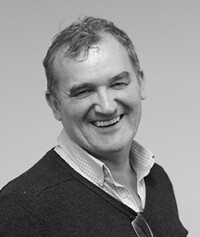
Tim Thornborough founded The Good Book Company in 1991. Today his roles include chairing The Good Book Company Trust and working with the Rights Team to grow TGBC's international reach. He is the author of The Very Best Bible Stories series and has contributed to many books published by TGBC and others. Tim is married to Kathy, and they have three adult daughters.