| 10+ copies | 30% off | $11.20 each |
| 25+ copies | 40% off | $9.60 each |
| 50+ copies | 50% off | $8.00 each |
Discounts applied automatically in your basket.
When you make the purchase, links to your ebook files (EPUB, MOBI and PDF) will be emailed to you immediately. We will ship the paperback to the shipping address given.
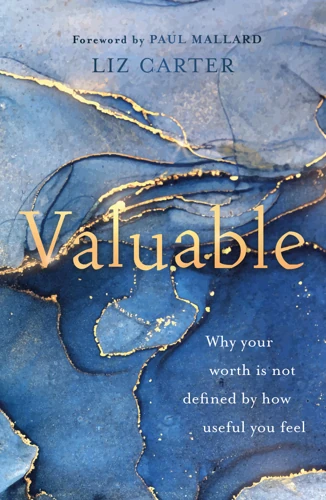
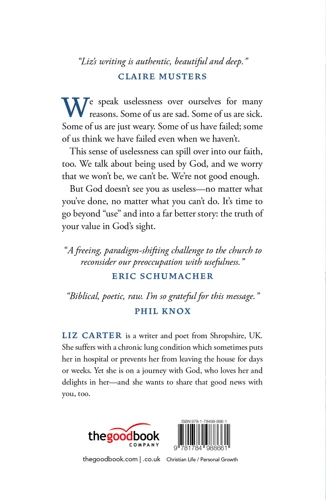
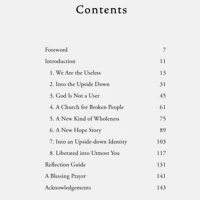
We all want to be useful to God, but often we feel that we're not, or, because of illness or other difficulties, that we can't be as active as we'd like to be. Liz Carter wants to rescue us from the spiral of feeling useless that we get caught in, and to show us that being useful isn't what Christianity is about. In fact, the Bible barely talks about God using people at all.
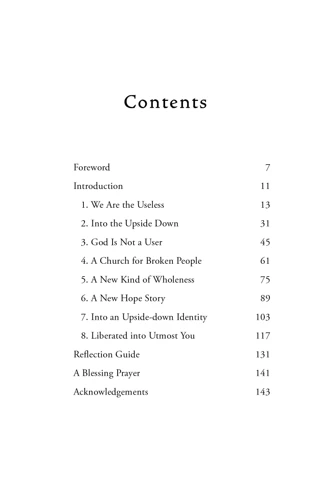
Weaving together insightful Scriptural analysis and beautifully told stories, Liz takes us on a journey to see what the Bible really says about weakness, identity, and God's purposes for us: helping us to see ourselves and our relationship with God in an entirely different and much more glorious way. Readers will discover that our purpose as ...Christians is not about being useful but about being known by God and enjoying him.
This book is particularly helpful for those struggling with long-term physical or mental illness, but it's also a great encouragement to Christians who feel that they are not good enough or useful enough to God for other reasons.
Questions at the end of each chapter make this a helpful resource to read with a friend or in groups.
I think the undertone of her feeling useless because of her own struggles came through heavily in her hammering the idea of never using the word use. The title of the book is “Valuable” and she could’ve focused on our value being in Christ alone, but didn’t do that as much as I thought she ought to. There were snippets throughout the book, but that should’ve been the focus. The truth is that we all have struggles. We are imperfect sinners who attempt to fill voids or overcome struggles by finding our identity and value in various things instead of ...focusing on our identity being in Christ alone and our value coming solely from Him. We are valuable because He says we are - despite our circumstances, limitations, and weaknesses. We are strong through Him. We needn’t worry what the world says or thinks about us because we are chosen, dearly loved, adopted children of God. We should fix our eyes on Jesus rather than our weaknesses. We That should have been the focus of this book. That should’ve been oozing from every page. And it wasn’t. And it was a great misstep because more people need to hear the good news of the gospel. God redeems us. He redeems our situations, our struggles, our sin.
Pages 96-98 were some of the only that I was wholeheartedly agreeing with. Here she wrote about our hope in Jesus because of his life, death, and resurrection and viewing pain through the lens of that future hope, standing firm in Christ, producing Godly endurance, and giving glory to Him. I would have loved to see the entire book focus around these few pages. It would have made a world of difference. I appreciated the author’s desire to bring this topic to light, but I for me, this book missed the mark.
This book contains much treasure and Godly wisdom needed for this dark modern age we live in.
It is food for the soul and a balm for the anxious mind.
All my life I have lived the ‘useful’ lie – for this, read – good enough, done enough, could have, should have - but didn’t, not as good as …… comparing myself and my family to those ‘shiny, happy’ people Liz speaks of and believing the lie that as a Christian especially, I should be better, more together, and whole than I have been. Lies I have told myself. Lies ...the world, particularly social media, tells us. But, no more.
Read this book and discover the freedom of life lived in the expanses of God’s redeeming, transforming, outrageous grace, where we are accepted as we are, loved unconditionally and can know joy and peace in the middle of the mess and a broken world.
In Valuable, Liz Carter discusses the problematic language of “usefulness” to God and helps us to explore better ways to convey what we actually mean with that statement.
Why is this a huge deal? Because usefulness often infers the necessity of ability and Liz asks us to think of those who may be less able-bodied or able-minded than others.
Liz also speaks about how much of a challenge this language can be for a new believer that came from an abusive background where being “used” wasn’t something worth celebrating. Think of the confusion it could cause when they hear “God wants to use you.”
I’ll be honest—initially, I thought that it was just semantics, but as I continued reading, Liz helped me to understand why it’s bigger than that. She helped me to see how being “used” speaks more to performance and productivity rather than posture and position. It’s much more works-based than identity-based.
I appreciate Liz’s heart for the subject matter, especially given her own battle with chronic illness. I was an easy read that opened my eyes to a new perspective.
I received a copy of this book for free from The Good Book Company in exchange for this honest review.