

Your Editor
Your editor works with you from the planning stage all the way through to the cover and titling stage. They’ll be your first go-to for everything outside of promotional work.
Your Marketer
Your marketer coordinates promo plans with you, our team, and any partners. They’re your go-to for anything related to promotional work.
Your editor will work with you to agree milestone deadlines for your manuscript. We don’t have one set approach, but your editor may suggest a way of managing the writing process based on their experience and expertise. Now is the time to let your editor know if you plan to be away or unavailable at any point during the writing process.
It’s over to you to write the manuscript. You’ll do this in collaboration with your editor, who will always be on hand to answer any questions you have.
The editorial process for each project is unique as we like to cater to the project itself, but typically it will involve your editor reviewing a first draft manuscript and providing some big picture feedback alongside some margin comments (we call this the “developmental edit”).
Once your editor is happy with the redrafted manuscript they will conduct a closer line-by-line edit (we call this the “desk edit”). Once the editor has finished the desk edit, they will send the manuscript back to you for final approval. Once you give that, the book is laid out and a draft typeset is created.
After the draft typeset is created, it is passed over to your book’s proofreader who will carefully check it for spelling, grammar, and punctuation consistency. The proofreader will also make sure the book fits our house style and check for theological accuracy. It’s very normal for the proofreader to raise questions and sometimes you may find that your editor passes them back to you for clarification.
Once the proofreader has finished and all the questions are clarified, the draft typeset will be corrected and a review PDF produced, ready to be sent out for endorsements.
This is where the editorial, marketing, and design teams come together. Your editor will convene a titling meeting, which will include members of the sales and marketing teams. Together they will come up with a proposed title for your book based on the current market and what positioning best sets it up for success. They will take into account your own ideas and preferences. Your editor will then share the final title with you.
Once the title has been agreed, your marketer will convene a positioning meeting. Your editor will meet with the marketing team to share the vision and some samples from your manuscript. The team will brainstorm initial marketing ideas as well as key concepts and angles to pull out in messaging, such as in the product description.
After both the titling and messaging meetings are complete, your editor will build a creative brief, taking into account your own ideas and preferences. They will then send the creative brief to you for your approval before submitting it to our design team who will begin work on your book’s cover. They usually come up with several design routes, which they present to a cross-section of sales, marketing, and editorial team members. Usually one route is selected and developed, and a final cover is produced, which your editor will share with you.
Usually, 6-9 months. We print our books in countries such as India and Turkey; then distribute them around the world in time for a unified release. Our marketing team uses these months to build the foundation for getting the word out about your book.
In collaboration with your editor, your marketer will determine the best time to begin planning promotions. They’ll review your whiteboard, which is a shared collaborative space your editor will send. Then, they’ll reach out to you, exchanging emails or hosting a call to kick off the process. If publicity is part of the plan for your book, your marketer will introduce you to our publicist, who coordinates articles, interviews, and influencer mailings.
Once the promo plan is finalized, you, your marketer, and our team will begin doing promo work. Depending on your promo plan, this may include prepping graphics, pitching publicity, announcing your book on social media, sharing about preorder deals, and more.
Your marketer will check in, confirm plans, and update you on promo efforts around your release day. Depending on your promo plan, you may continue to be busy with promo efforts for a month or more after release.
Marketing is when you or we tell readers about your book. Publicity is when a third-party tells their audience about your book. This most often entails a third-party sharing your article, hosting an interview, or posting a review. Your publicist coordinates these opportunities. Your marketer focuses on direct promotions of your book, such as web, email, social media, catalogues, events, launch teams, etc.
When the planned efforts for your book release are complete, your marketer will follow up with you. They’ll send highlights of the launch and will let you know if any additional, specific promo efforts are still in the works.
Long after your book releases, we’ll still be advertising it and including it in our catalog. If you have ideas for follow-up promo efforts, your marketer will be glad to hear them. Likewise, they will let you know if new promotional opportunities arise.
In order to provide the most accurate information, we wait to share sales numbers with you until your first royalty report. Your royalty reports will note how many of your books have sold in total, as well as for specific tracking periods. More about that here.
Marketing funnels represent the general buying journey for customers. These tips highlight what we find works well for shepherding potential customers toward buying your book and encountering Christ through it.
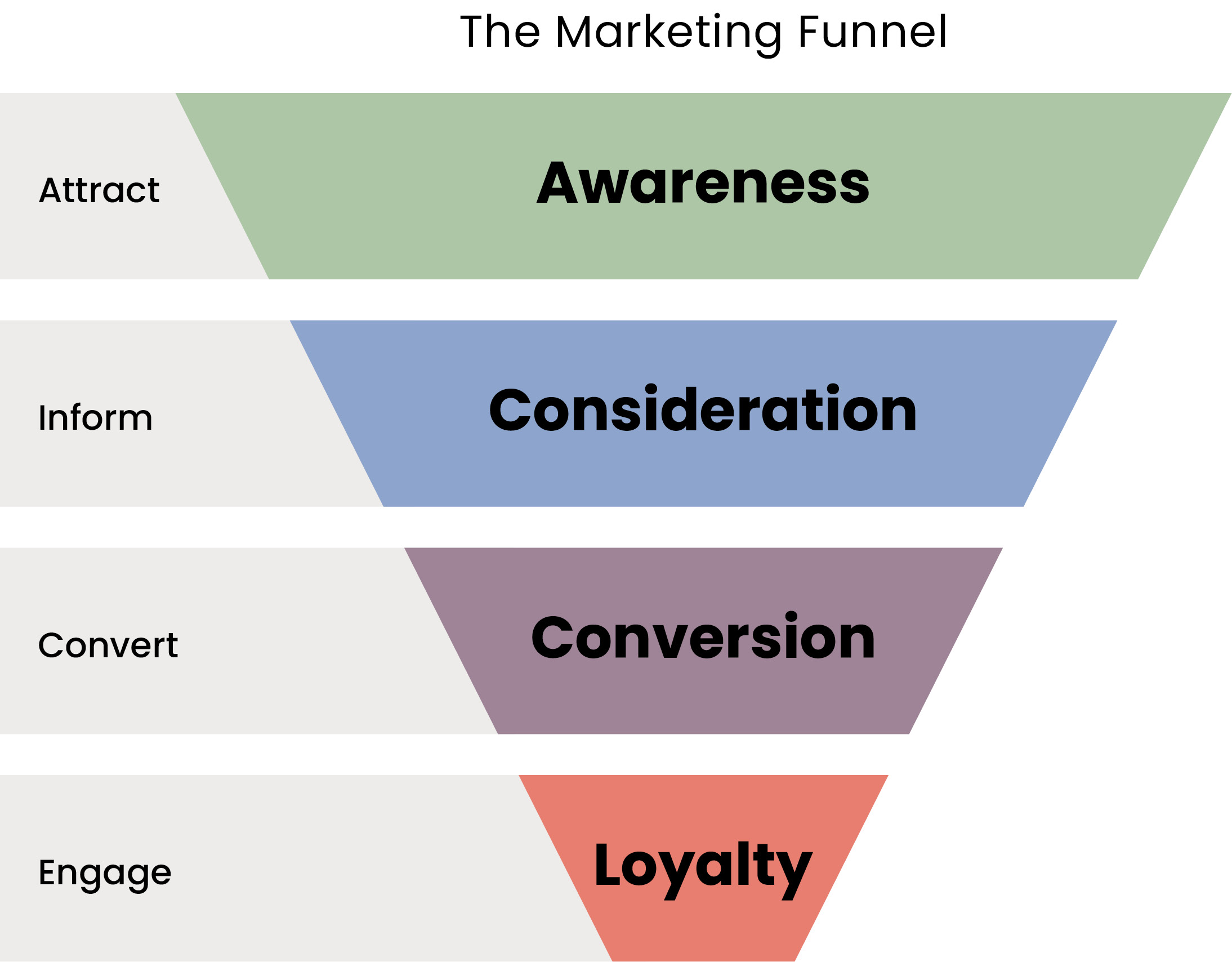
You might also call this stage “letting people know your book exists.” To get it on readers’ radars, we suggest:
At this stage, readers might read your book’s description, add your book to their wishlist or cart, read some of the “look inside”, or otherwise put a little time into considering buying your book. You can help them by:
This is when potential readers “convert” into buyers. They click the buy button or check out at the register. You can make this easy and enticing by:
Your readers become your supporters at this stage. They’ve read your book, they love it, and they want to keep up with your work and help others discover your work. Engage with them by:
You don’t have to create a brand and live a public life to serve your readers well. And that’s the goal—you care about your readers and want to serve them. The “loyalty” stage of marketing is about just that: removing barriers like outdated links, making space for connection, and otherwise doing what you reasonably can to care well for those you write for.