This morning almost started well. When I opened my eyes, I offered a prayer of gratitude for a new day and a warm house. “At last, I’m learning to be content,” I thought. But immediately, my husband ruined it. I had to get up, but he was still asleep and wasn’t breathing quietly! I deliberately yanked the duvet as I got up.
“How is this fair?” I seethed.
“All right for you,” I grumbled.
Struggling in the dimly lit hall, I tripped over my daughter’s bag. “Clear up after yourself!” I ranted inwardly.
Before long, even the cheap kettle had got a rant for its slow boiling.
“Maybe I’d be happier living alone,” I thought.
The kitchen clock chimed 6 a.m. The day had barely begun and already a monster was on the loose. I slumped into a heap, feeling utterly despondent. This is not who I want to be. Surely this isn’t who I am?
As a clinical neuropsychologist, I’m supposed to be the expert, but despite five decades of life, you can see I remain a deeply flawed, moderately messed-up muddle of a human. Like most of us, I hope others won’t see my true nature if I paste on a smile, wear clean clothes and work hard at church. Sadly, that isn’t true. In the face of the smallest struggle, the truth is shown by my actions.
But it’s not how we want to be, is it? I desperately want to be a supportive wife. I want to be a loving mum, a kind colleague and the most grateful friend. I want to be seen as joyful, sunny and easy to please. I want to be remembered as someone who exemplifies the love of Jesus.
So, why am I grumpy and irritable at the smallest problem? Why do I withdraw when I want to have fun? Why am I mean when I want to be kind?
Why am I such a mess?
When I’m asked this question at work, I explain that whether we’re aware of it or not, we are frequently controlled by what’s going on inside of us. Our negative thoughts and painful feelings act as internal saboteurs, which is why we so often behave like the person we least want to be.
My clinical answer explains what we experience as part of the normal human condition. But the Bible explains why this is the default human condition. We all struggle in much the same way because we’ve inherited Adam’s weak and sinful DNA. By nature, we are unable to be good because we are not good. We are sinners.
Sometimes, of course, we do better. We help out even though we’d rather watch Netflix. We take criticism with humility and respond well when we envy. In these moments, we feel like the rational, spiritual people we were created to be. We experience the sweet spot we’ve been designed to enjoy.
But our best moments are less frequent than we’d like. So, how do we manage our inner turmoil and enjoy more time in the sweet spot?
Should we lie about our thoughts and feelings?
Should we try harder?
Should we use our tricky thoughts and painful feelings as an excuse to behave badly?
The reality is that there is only one true solution. Jesus lived a perfect life and gave it up for me so that I can be transformed to become like him. I am still a mess, but in Jesus, I am a holy mess. One day, I’ll leave my mess and enjoy being forever holy.
My job as a clinical psychologist is to help people spend more time in the “sweet spot”. I teach them the skills to manage their thoughts, feelings and desires so that their behaviour starts to match up with how they want to be, and they can live the lives they want.
As a Christian, I also know that in order to see the deepest change, we need God to be at work in our lives. We need to be transformed from within. Then our outer behaviour will not just reflect who we want to be but who God wants us to be.
But this transformation we need from God doesn’t mean that the skills I teach as a psychologist are not relevant for believers. They are! Even as Christians, we get distracted. We forget what Jesus has done for us, or we stop following in his ways, and consequently we end up burnt out, or withdrawing from people because we can’t cope.
The Bible urges us “to put off your old self”—which you might call the messy self— “to be made new in the attitude of your minds; and to put on the new self, created to be like God in true righteousness and holiness” (Ephesians 4:22-24). Put off and put on. As Christians, we have been given a new self by the work of Jesus—but we still have to put it on every day. And here is where the tools of psychology can help.
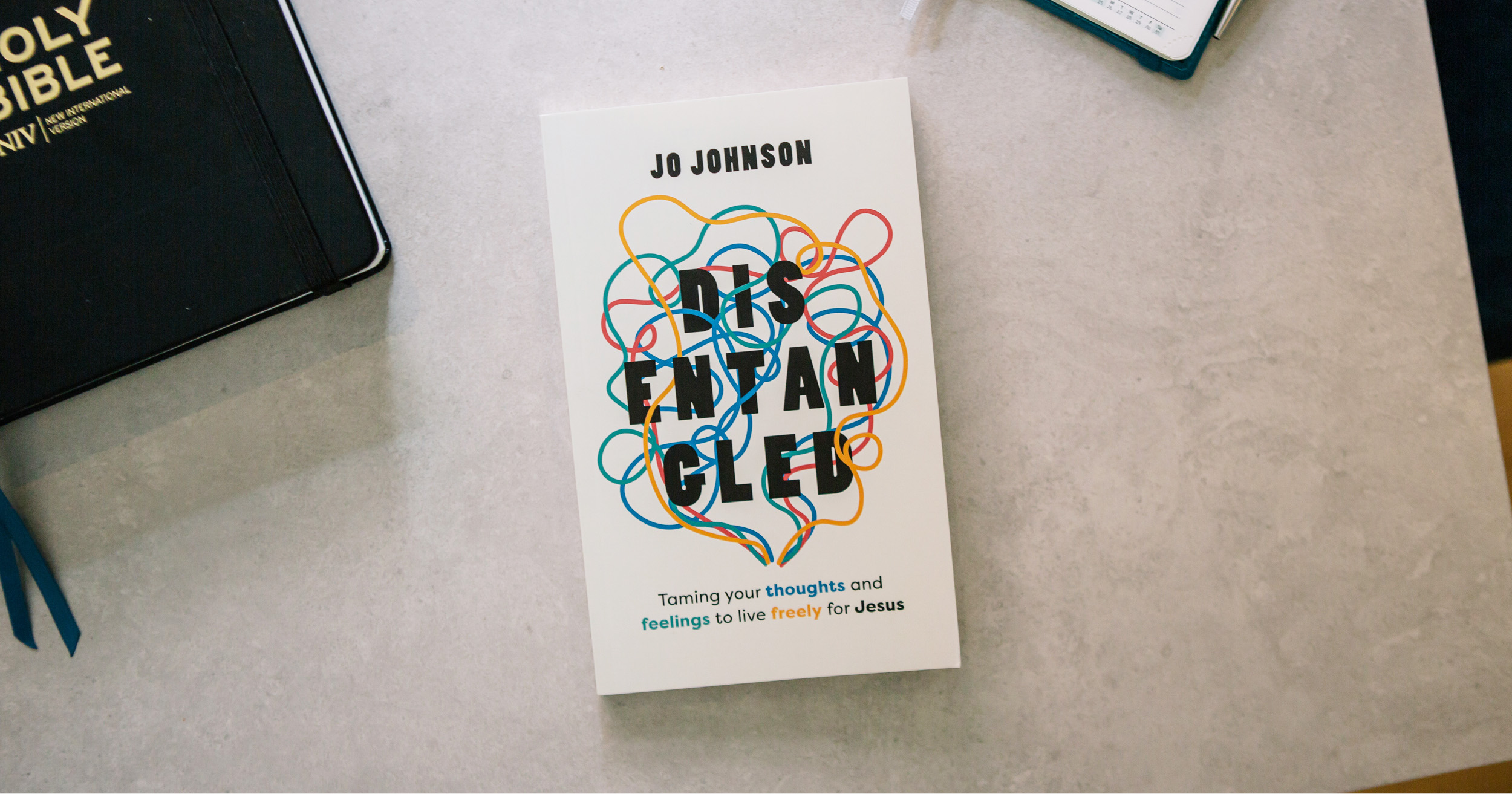
This excerpt is taken from Disentangled: Taming Our Thoughts and Feelings to Live Freely for Jesus.
Jo Johnson is a clinical neuropsychologist with decades of experience both inside and outside the UK National Health Service. She is married to a church leader and lives in the south of England, where she enjoys walking and drinking coffee. Alongside Disentangled, which is her first work of Christian non-fiction, she is also the author of a number of psychology books, as well as several psychological novels including Surviving Me.