The third and final part of Tim Chester's interview. This time he speaks about Delighting in the Trinity.
What figure or work has been the most influential in your thinking on the doctrine of the Trinity?
My desire to write a ‘simple’ book on the Trinity started with the observation that so many of us get a little embarrassed by the Trinity as a subject. Because the math doesn’t seem to work, and the arguments about it are so complex, a lot of believers just try not to think about it. It doesn’t seem to be good news at all. But, of course, the opposite is true. When you start to see how central an understanding of the Trinity is to everything in the Christian life, you start to discover how amazing and wonderful God is. It’s a failure by preachers to express these wonderful truths in a way people can really grab hold of that is really at the heart of the problem. ... continue reading
The second part of a three-part interview with Tim Chester. Here, Tim speaks about his new book, From Creation to New Creation.
Why write a book unpacking the storyline of the Bible? Why is it important for the health of the church to understand and embrace the overarching story of the Bible and how it “fits” together into a coherent whole?
I’m convinced it’s absolutely vital for the church to have a strong sense of the Bible story as a whole and how we fit in that story. It’s vital if we want to read the Bible properly. But it’s also vital is we want to understand our identity as Christians. Too many Christians are influenced by the individualism of our culture. We think of the gospel as all about how I get saved by God. It is that, but it’s much more than that. The Bible is the story of God saving a family, a nation, a people. Our identity is communal and missional.... continue reading
 Your weekly filter of news and interesting stuff from the internet.
Read Part One of a three-part interview with Tim Chester, church planter and author, where he discusses his new books, Delighting in the Trinity and From Creation to New Creation.
Can you tell us a little about yourself? Your background, interests, and passions? What current projects are you working on?
I grew up in Reformed Baptist circles. I’m part of a missional church now, but theologically I’m still Reformed and still baptistic!... continue reading

Each day we’re seeing more suffering from Japan on our TV screens and in our newspapers. We blogged on a Christian response to friends' questions here: but we also wanted to point you to some great, helpful readable books which deal with the subject in a bit more depth.
For a readable, practical and heart-felt look at faith in the face of suffering: If I were God I'd end all the pain, by John Dickson. Currently £4.79 (20% off).
For a single chapter on the issue, which requires careful reading but is well worth it (as is the rest of the book): The Reason for God, by Tim Keller. Currently £7.65 (15% off).
For a more in-depth look at suffering and how Christians should deal with it in our own lives as well as in the news: How long, O Lord?, by Don Carson. Currently £13.
If there is another resource that you’ve found really helpful in thinking through this difficult issue, do let everyone know about it by commenting below. We can then point people to it on our website, or locate it cheaply elsewhere if we don’t have it.
Here's (probably) the last thing we'll be posting about the new Rob Bell book - a round up of some helpful responses from the US blogosphere, where this has been the hottest topic this year.
And finally, Martin Bashir interviewing Rob Bell on the controversy (in a very Paxman-esque style):

What effect would persecution have on your evangelism?
For the last few days I’ve had the privilege of spending some time with a Christian who lives in one of those countries where Christians are persecuted, and where there is political upheaval and significant unrest. It’s a life so dangerous that very few people know who they are or where they come from.
But what they said is worth being made public.
I asked them how discrimination and the risk of violence affect their mission and ministry. They smiled and said something that will stick with me for years.
“It changes nothing.”
Which is a great challenge to those of us in the West. There is no such thing as being in a situation where it is OK to give up serving. No context is a “get out of mission free” card. If our speaking about Christ produces laughter, derision and scorn; if our living for Christ means we lose out at work, in relationships or with our family; “it changes nothing.”
“For we are God’s workmanship, created in Christ Jesus to do good works, which God prepared in advance for us to do” (Ephesians 2 v 10).

A major topic of conversation in our office today, like in most offices up and down the country and round the world, has been what’s happened in Japan.
How do we respond to such horrendous suffering? How do Christians begin to trust a good God in the face of such facts?
In some ways, now is not the time for anything other than sorrow. giving what we can, and, in a Christian’s case, prayer. But still, some people demand answers from us: here, for what it’s worth, is what we think we might try to say.
Some other helpful and interesting resources:
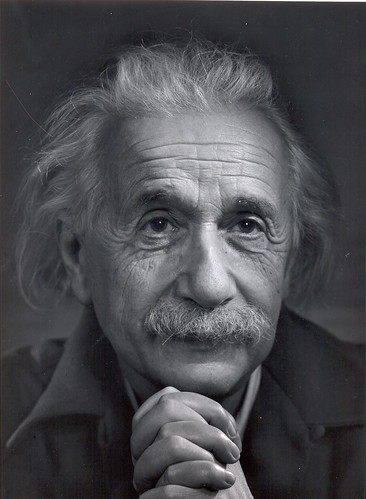
Albert Einstein probably wasn’t thinking about the gospel of Jesus Christ when he said this, but it’s a great reminder for Christians who teach the Bible to adults or children, or who are trying to tell people the gospel message (in other words, all Christians!):
“If you can’t explain it simply, you don’t understand it well enough.”
A great truth to ease you into your week.
He has committed to us the message of reconciliation. We are therefore Christ's ambassadors, as though God were making his appeal through us. 2 Corinthians 5 v 19-20