It's a great question. But how do you explain it simply? And at the same time inspire people to give reading it a go?

"But I don't want to sit down... I want to be out doing something..."
A familiar cry during the Easter break. Children liberated from the structure of school, and fueled with more chocolate than might be ideal, want to bounce. And why not? They are children after all!
But how can parents (and grandparents and aunts and godparents and friends) harness some of that boundless energy and creativity and use it this week to help their children understand the gospel better?
One way is to encourage them to tell the Easter story not just listen to it. A drama, a puppet show, a powerpoint presentation, a collage or painting, a photo story, an acted scene videoed and edited by them, a song written and performed all engage children (and adults for that matter) in the Easter story in new ways.
"Expression deepens impression" as the old adage goes. We learn something well when we explain it to others.
So tonight, before the chaos of the bank holiday weekend sets in, why not get out an age-appropriate version of the Bible, a box of creative tools and set the children you are naturally going to be coming into contact with the task of retelling the Easter story? The only parameters are that they need to be faithful to the biblical text ... other than that, they can let their creative juices flow. And then promise them that you'll look at it after lunch on Easter day so they know just how interested you are in what they are doing.
Hours of fun and great potential for spiritual growth this Easter.
So go on, let them tell it back this year ...
Some "churches" are just beyond the pale.
We're scandalised by their false teaching, outraged by the way immorality and sin is tolerated and even applauded, and incensed at the way preachers make themselves the centre of attention.
Sadly the wreckage of apostate Christianity is all around us. From crumbling denominations to wild money-grabbing showmen who know how to turn on our attention and empty our pockets at the same time. And of course, like self-respecting Bible-believing evangelicals, we turn away in sadness, dismissal or rage. We distance ourselves from them as a disgrace to the gospel and as a poor advertisement for what faith in Jesus as Lord should look like.
Or should we…... continue reading

Church packed. Songs sung. Prayers said. Notices read.
There was a calm and silent atmosphere as people sat in quite reflection. But then the peace was shattered by the insistent shrill wailing of a fire siren. As the deafening racket continued, an announcement came over the PA system:
"There is a dangerous fire in the building. You must calmly get up out of your seats now, and leave the building."
The siren continued to wail for a time, but eventually it stopped, and the worshippers sat in their rows looking nervously around at each other. Eventually, they began to talk:
"Wasn't the sound of the siren interesting!" said one woman.
"Yes", replied another, "Once you got used to it, it was really quite lovely."
"I though the announcement was very clear and helpful", said a man.
"I've made some great notes that have got all the main points down" said another.
"I didn't find it that interesting - no funny stories or jokes at all" said a sullen teenager.
The excited buzz of conversation continued as the smoke slowly filled the room…
Q: How do we know when people have truly heard the fire alarm?
A: When the building is empty.
Q: How do we know when people have truly heard a sermon?
A: suggestions below please...
Based on an illustration heard from Mike Cain at the Planting for Christ Conference last week.
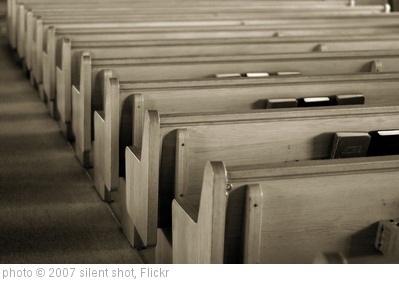
A week ago one female blogger in the states posted her 15 reasons why she left her church. I don’t know her. I don’t know her church. I’m not going to assess her decision. What has been intriguing, however, is the comments that have followed. Nearly 800 responses, many of which have been profoundly caustic. Some, down-right unkind.
It might be that some of the blogger’s assessments of her church feel very alien to other members. If her comments were unfair, it is right that they are challenged. Her understanding of Scripture may well need some discussion. But having said that, I’m saddened that the responses haven’t been spoken humbly and in love.
I could rant about the dangers of quick-fire blogging and commenting that can all too often reflect “heat of the moment” emotion much more than “godly wisdom”. I could wax lyrical about postmodern culture (or just the nature of fallen humanity) that has the tendency to be self-seeking rather than other-serving. But I probably shouldn’t. It’s very easy to criticize what’s happening “out there”. It’s far more important to turn a thoughtful eye to our own hearts. So instead I’ll pose the question: how do we – you and I respond when someone leaves church? Do we display a balanced attitude of truth and love that unswervingly seeks the good of the precious sheep leaving the fold?
Or to put it more practically, here’s a challenge for the weekend (one that I am posing from a position of weakness not strength). Think of someone who has left church, someone who stays home on Sunday these days. And ask yourself 5 questions:
As Christians we are called to love God and our neighbours (Luke 10:27), love our brothers and sisters in Christ (Hebrews 13:1) and our enemies (Luke 6:27). It’s pretty certain, then, that we’re called to love Church-leavers too … and to do so right now.
I'm not talking about the dawn of time and all that bewildering Cosmology stuff that lots of clever people like to think about with their calculators at hand.
I'm talking about what so often happens at the end of home groups:
We've finished reading and thinking about the Bible together. We've been amazed at how brilliant / surprising / strange / terrifying God is. We've been challenged deep down to think about how we can serve Christ better. And then the leaders says: "Right, what shall we pray for?" And then comes the Big Bang! The sound of Bibles closing around the room.... continue reading
Let's face it. Youth work is a fashion victim.
I'm not talking about the clothing fads that teenagers go through. (Hey, I went through that myself, and if enough people like this on facebook, I promise I will publish some of the more outrageously embarrassing teen photos of myself so you can see what a fashion victim I was at 16!).
No. I’m talking about the "latest way" that we should be doing youth and childrens' work that is presented as the answer to all our problems. Since being involved in youthwork for the last 30 years, I've noticed the pace quicken. We're now down to something new and revolutionary every 2 years.... continue reading

1 Corinthians 16 has, rather unexpectedly, helped me put into words a thought that’s been buzzing round in my head ever since Mark Driscoll wrote his “Blog for the Brits” a few weeks back. Paul’s letter to the Corinthian church has been much in my mind because I’m editing Mark Dever’s second Good Book Guide volume on this book which is out next month—the second early in 2013).
What struck me about chapter 16 is that Paul clearly thinks it would be good for the Corinthian church for a pastor “from the outside” to spend some time with them. He himself can’t come for a while (v 7-9); so he’s sending Timothy, who will “carry on the work of the Lord” (v 10). It seems it was quite common for a Christian leader from a different country to come and spend some time with a church—in Titus 3 v 13 it seems that Apollos—himself from Corinth—has been spending time in Crete.
Which makes good sense. Think of it as church-management-consultancy. When a firm wants to see how they can do better, where they’re being complacent or unprofitable, they don’t get someone who works for them to analyse them; they get someone from the outside. Someone who knows how things are done elsewhere; who can challenge assumptions; who can ask the difficult “Why” questions; who can give the church what Mark Dever calls a “larger vision”.
It’s really helpful to hear what Christians who aren’t from “round here”, but have come to spend some time “over here”, think of our church which exists “right here”.
All of which brings me to something Driscoll said to British evangelicals: “Please ask … why, when there are big events for evangelicals, a speaker often has to be brought in from another country to preach?”.
UK evangelicalism has its weaknesses (as did the Corinthian church, the Cretan church, and as in fact does every church). But perhaps one thing we’ve got right is our willingness to listen to, learn from and be challenged by pastors from other countries.
It’s not that when there’s a big event the organisers have to bring in a foreign speaker (after all, it’s the word of God, not the standard of the speaker, that matters). It’s that they often choose to—because an overseas speaker’s gospel-centred perspectives will be different to ours.
And here’s my provocative thought to finish off with: what proportion of American “big events for evangelicals” invite a headline speaker from overseas? What perspectives and challenges would a UK pastor bring to American assumptions and approaches to ministry? (I can think of a few, but that’s a whole other blog!)
It’s not a sign of something wrong with a church that they do ask outsiders to come and speak to them, critique them, help them. Perhaps it is troubling when a church network doesn’t. Is the issue more with US evangelicalism than British? Comments below!

Sometimes you come across a quote that just needs to be shared:
"A nominal Christian is content with proving the way of salvation by a crucified Redeemer. But the true Christian loves it, delights in it, glories in it, and shudders at the very thought of glorying in anything else ... Let all your joys flow from the contemplation of his cross."
Charles Simeon
It’s not just a job for the professionals. We all have a role to play. There are hurt people in every congregation and we are all called to roll up our sleeves and get involved in spurring them on (Hebrews 10:24).
But pastoral care is not a simple task. It’s hard to speak the truth in love. And, as I was reflecting with a seminar group this weekend, we all too often let our desire to be encouraging overtake our need to be Christ-like and end up saying things that have the potential to be profoundly unhelpful.
What things? Well, the list is large and at first glance fairly innocuous but here are the big 3 phrases that we think should rarely, if ever, pass our lips and the reasons why they really don’t help.... continue reading