It's officially the wettest drought on record in England.
Since the hosepipe ban in the South East started 6 weeks ago, it just hasn't stopped raining. The unrelenting grey gloom out of the window of The Good Book Company offices in Epsom is only interrupted by the occasional delight of a rainbow. The appearance of which tells us that the latest shower has passed by, and the sun is out.... continue reading

We always love meeting you so if you are coming to the Christian Resources Exhibition in Esher, Surrey next week then do please drop by the stand and say "hello". It would be great to hear how you are finding the resources we produce and to talk to you about some of the things we have coming up in the future ... And, of course, there will be some great deals! You'll be able to find us on stands E53-55 in the Esher Hall.
And, if you enjoy the kinds of ministry topics we blog about, you might like to come to one or more of the seminars we are running:
We look forward to seeing you there!
We've been having quite an exciting time over the past few days!:
Huge congratulations to the Good Book Company's Logistics Manager, Tom Beard who tied the knot on Saturday to the lovely Katie. It was a fantastic, Jesus-centred service ... and a rare opportunity to see some of the Good Book lads wearing suits (so smart!).

The ladies of the company weren't looking too shabby either!

And just a few hours later, it was congratulations to one of our directors, Tom Seidler who got engaged to the wonderful Rowina!

And last but not least ... many congratulations to Senior Editor, Carl Laferton and his wife, Lizzie who are now parents of a beautiful baby boy.
What a wonderful time!
Let them give thanks to the LORD for his unfailing love and his wonderful deeds for men. - Psalm 107:31
Two organizations, both of which exist to push a particular belief system, have recently booked advertising space on London buses, promoting different ideas about the same thing. One’s on the side of buses. The other’s been banned.
Advert One
The first advert reads: Some people are gay. Get over it.
The first sentence is a statement about identity. Some people self-label themselves as “gay” because they experience and act on same-sex attraction, and see this as a core part of their identity. The last sentence is suggesting that some people have a problem with the first sentence, and shouldn’t do. In other words, it’s a statement of belief, a value judgment on anyone who thinks that being actively, physically homosexual is not right.
Advert Two
The second advert reads: Not gay! Ex-gay, post-gay and proud. Get over it.
The first two sentences are statements about identity. Some people self-label themselves as not gay, either because they have never experienced same-sex attraction, or because they used to but no longer do, or because they have decided there is something about who they are which is more important than their physical attractions, and so have taken the choice not to act on how they feel. The last sentence is suggesting that some people have a problem with the first two sentences, and shouldn’t do. It’s another statement of belief, a value judgment on anyone who thinks that the idea of someone moving beyond same-sex attraction, or choosing not to act on that attraction, or choosing to think that that attraction is not right, are themselves not right.
So both adverts are simply two different ways of looking at identity, and two different value judgments of other people’s beliefs. And, let’s face it, both actually suggest that others are wrong to hold the views they do.
The first advert has run. The second has been banned. London Mayor Boris Johnson decided that his own value judgment was more important than free speech, and stated strongly that the second ad shouldn’t run.
What it tells us
Why does this matter? Because it shows that we’re into a new phase of public discourse about homosexuality. It’s not that there are now two views, each opposing the other, jostling for a hearing and for support in the public arena. It’s that now, there is only one view allowed in the public arena. Stonewall—the pro-actively-gay lobby group who paid for the first ad—are allowed to make statements about identity and value judgments about those they consider wrong. Anglican Mainstream and Core Issues—the Christian groups who booked the second ad—are not.
Here’s what Stonewall said of the decision to ban people who hold different views to theirs: “We are delighted by TfL’s clear commitment to diversity [diversity that isn’t actually diverse enough to include people who disagree with us]. It is fantastic that no adverts will be promoting voodoo, gay-cure therapy [can you imagine what would happen if a group holding the opposite view used such loaded words as “voodoo”?].”
Aggressively pushing a belief; using extreme words to describe others' views; refusing to accept that some people's experience might not fit in with your view of the world; and opposing the right of those who don’t agree with you even to have their voice heard. But that's all fine, because they're not Christians…

A happy Easter to all our blog-readers. As Martin Luther once wrote (and sung):
In the bonds of death he lay
Who for our offense was slain
But the Lord is risen today
Christ hath brought us life again
Wherefore let us all rejoice
Singing loud with a cheerful voice
Hallelujah!
Hallelujah indeed. He is risen!
Almost a year ago, we posted about how you get a religious view into the secular UK media. And we suggested there are three ways to do it:
So, turn to the Telegraph today, and you can read the views of Bettany Hughes, who coincidentally is fronting a new BBC2 series and is an “expert in ancient history” (is there anyone, really, who is truly an expert in the whole of ancient history?!). She is claiming that the story of women in Christianity has been suppressed.
“Who knows whether God is a girl?” she muses. Presumably, God does, and could choose to tell us if He (I use the word advisedly) saw fit.
Anyway, it’s a great example of a Type-One Christianity-in-the-news story. As is this one, questioning what gender—if any—Jesus was. I’m not going to comment on it, because I think it’s groundless, and disrespectful to the Son of God.
While pieces like that continue to fill column inches, here are the three headlines we predicted a year ago you wouldn’t see, and which we haven’t noticed in the intervening twelve months. But they have been happening, unreported:
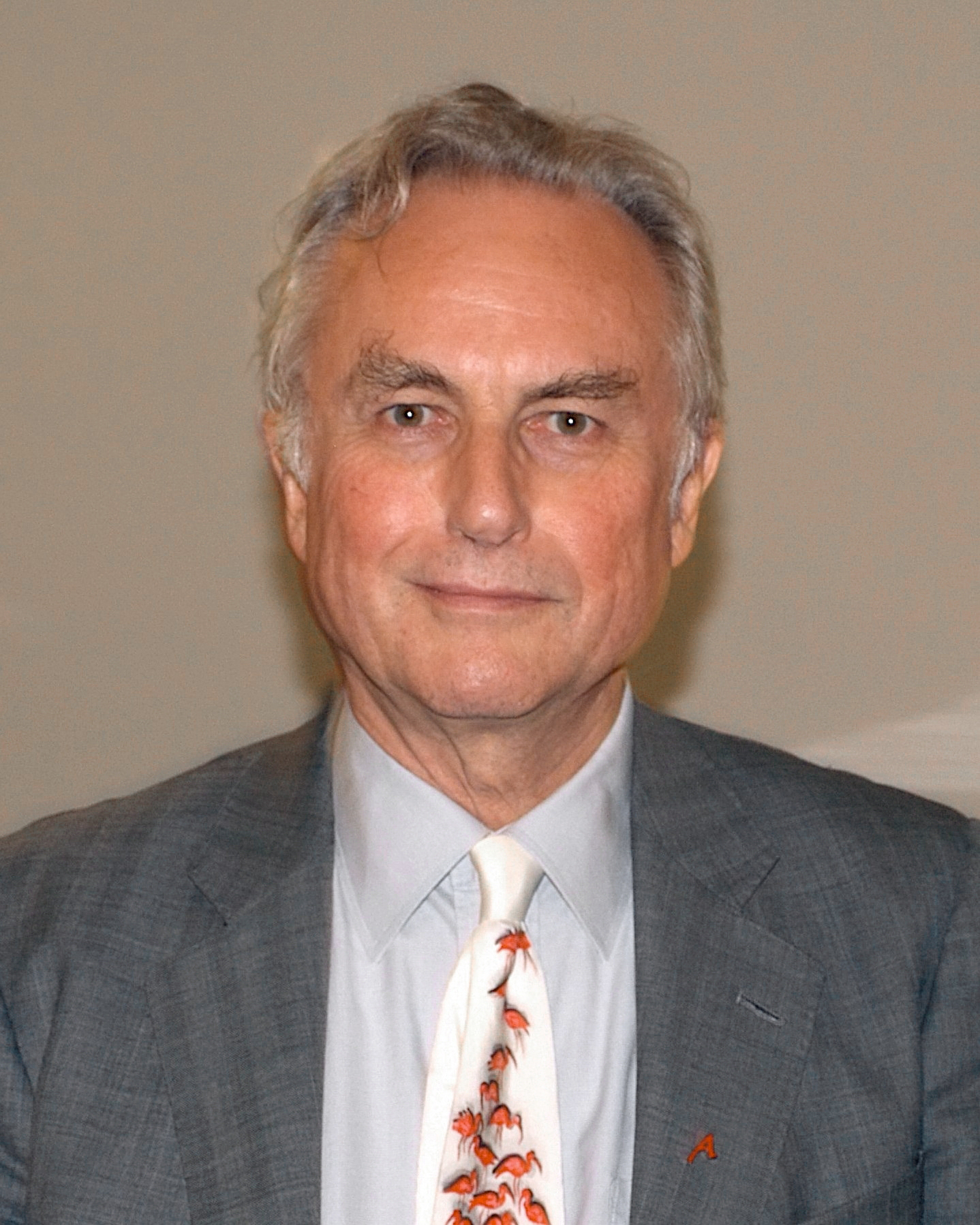
The Atheist and Christian world was rocked after it emerged this morning that Richard Dawkins is to be appointed Archbishop of Canterbury after a back-room deal brokered by the outgoing Primate.
In a shock news announcement from Lambeth Palace this morning (April 1st) it was stated that the outspoken atheist had radically changed his views in the last few months.
"I have always said that I am a 'cultural Anglican' said the Oxford professor, "but after years of resisting belief and arguing against it, I finally gave in to the whisperings of my heart earlier this year. I am now a believer."
Rowan Williams commented: "After our debate at the Oxford Union, Richard and I started to meet, and talk over the objections to belief. One by one, I explained patiently how his objections were not sound - even by his own strict scientific criteria."
Professor Dawkins said: "I mocked the idea of his existence for years, but like C S Lewis before me, after weeks of wrestling, I knelt down in my study and prayed for the first time to the Invisible Pink Unicorn that I had long rejected."
Dawkins confirmed that since his conversion, he had received several job offers."I was approached to be John Piper's eventual successor at Desiring God," he said. "But I felt that the microphones they use would make me look like I worked at a Burger King drive-thru."
Williams, who steps down as Archbishop in December is enthusiastic about the new appointment to the See of Canterbury. "Richard will bring his outstanding mind to bear on a whole range of difficult issues the Anglican communion faces in the future. His refreshing new theological perspective may shock some, but his remarkable conversion from convinced atheist to true believer will be enough to convince many in itself."
They are also hopeful that this new Orthodoxy will do much to set right the church's financial difficulties. "Posters, T shirts and effigies of the Invisible Pink Unicorn are already being designed and manufactured for sale in cathedrals and churches throughout the Anglican Communion," said Dawkins. "With the ear of faith, I can already hear the tills ringing."
Long-term adversaries of God Delusion author were both delighted at the news, but cautious about the newfound faith of the Oxford academic, some thinking that it might be unhelpful to expose a new believer to the pressures that such a new office would bring, others questioning of the details of his conversion. But many are enthusiastic.
Said one un-named source: "The Invisible Pink Unicorn has long been a hidden theme in Christian theology. Archbishop Richard will be continuing the fine tradition of theological development that has marked the Anglican church in recent times."
Richard Dawkins is 71.

You may have read it. You might have given it away. We hope you’ve heard of it: One Life – What’s it all about, the great paperback by Rico Tice and Barry Cooper. It’s been used to help many people understand the gospel better in English-speaking countries for years. Now it’s at work in India, the Hindi translation of the original Christianity Explored paperback having just been launched in Delhi.
But it’s not only the book that’s been translated into Hindi. The second edition of the main course has as well. Recently 142 Christianity Explored leaders were trained in Uttarakhand. In Delhi, 183 people attended a course held at the Bible Bhavan Christian Fellowship. It’s an exciting privilege to be a small part of gospel growth in India!
The Hindi version of the course is also available in the UK. The paperback will be available in the next few months. Please do pray with us that the material will be used to God’s glory among Hindi speakers across the globe.

If you live east of the Atlantic, you may not have heard of Tim Tebow. He was last season's quarterback for the Denver Broncos (American football, if this sentence is losing you), leading them to the NFL play-offs. He has more than a million Twitter followers and landed an endorsement deal with Nike. Last week, he was traded (transferred, in UK English) to the New York Jets.
Oh, and he's a Christian, who prays before games and uses media interviews to share the gospel.
But you'd hardly have known that from the UK coverage. See if you can (eventually) spot the word "religious" in this article, which focuses on Tebow-the-celebrity. You get a tiny bit on his pre-match praying from the Guardian, but they happily follow that up with this sneery, snide Tebow-the-idiot-Christian piece.On the other hand, in the US Tebow's faith is more than just cannon-fodder for journalists who want to look clever. And his beliefs are mentioned, and commented on, in a pretty respectful way—see here in the New York Times, not exactly a bastion of Biblical viewpoints.
I don't want to make too much of it. But it does point up a difference between the UK and US media. In the US, Christian faith is more mainstream, more respected, more understood. If a Christian pastor writes a book, he's far more likely to have it picked up and discussed in the secular media. Talkshows are far more likely to give a hearing to a proper, biblical Christian voice.
In the UK, the secular media doesn't really understand Christianity; doesn't bother to get to grips with it and discuss it in the same way as the Budget is, or the Champions League is. Public displays of faith are usually quickly watered down (my favourite was at the 2003 World Cup, when the commentator said of the South African and Samoan teams praying together after they'd played one another: "Ah, the unifying power of sport").
This isn't to say "it's better in the US" (though in many ways their church scene has much to teach us). It is to say "it's different in the US". The great things that are happening in UK churches—the gospel transforming deprived areas one person at a time, the Bible being gently brought to bear on people facing agonising, life-changing decisions, and so on—go unreported, or are only spoken of to be undermined. The pastors who preach with conviction, faithfulness and passion go unnoticed. The growing churches remain unmentioned.
That doesn't mean they're not happening. It just means that we'll have to look harder. And that we won't hear about them in our secular media.

Richard Dawkins must be turning on his soapbox.
There’s been a lot of praying going on—and a lot of people telling other people to pray—since Fabrice Muamba collapsed on the White Hart Lane pitch nine days ago.
Other players prayed on the pitch. Twitter was alive with prayer requests from celebrities such as Wayne Rooney. “Pray 4 Muamba” T-shirts sprung up everywhere. And all this before Muamba’s family had requested prayer.
And wonderfully, God seems graciously to have chosen to save this man’s life. Though his heart stopped for 78 minutes, he is now talking and moving—and was able to watch Bolton’s 2-1 win on Saturday (they may yet avoid relegation—see, miracles do happen!)
So what do we make of all this? Two things, perhaps:
1. Britain is still a religious country.
When the chips are down, people pray. And people preach prayers to others, too. Wayne Rooney may be a surprising preacher, but that’s what he was doing—telling others to act in a certain way to the Almighty. Despite the best efforts of active secularists and militant atheists, prayer is still our default action when confronted with the shocking reality of a broken world where 21-year-olds nearly die (and, sometimes, do die).
2. Britain is NOT a Christian country.
Let’s not kid ourselves. These were not prayers offered in faith to a Father who was being trusted to act for the good of His children and supremely for His own glory. Nowhere in the celebrity/sporting twittersphere did I spot a prayer which began “Lord, if it is your will” and ended “for the glory and in the name of your Son”. These prayers were offered to an unknown god, a genie in a bottle. A kindly deity who we can ignore every day except the day we need him, and who we can then whistle up, tell what we need, get it, and carry on as before. That’s not who God is. He would be no more or less God if He had decided that Muamba had come to the end of his life (as he will, one day—just as we all will).
And there are prayers which God won’t answer—prayers which come from a heart which has the wrong attitude, to which God says: “Even if they call to the Most High, he will by no means exalt them” (Hosea 11 v 7). God saving Muamba isn't the result of the prayers of people who treat the Creator of everything as though He were a God who can be taken off the shelf, dusted down, given His orders and then returned. It may be the result of the prayers of His children, who know who He is, who seek to treat Him as God, and who ask for His forgiveness through His Son when they fail to. And it certainly is because He is a gracious God, who gives us every breath we enjoy as a gift, whether we recognize that or not.
So the reaction to Muamba’s heart attack—and let’s give thanks to our Father that He has mercifully saved his mortal life—is at once heartening, and disheartening.
Britain still believes in something. But most of us have no idea who He is.