If you’re a smartphone person, have you got the Explore app yet?
It’s been encouraging to see the reviews for the app, launched this week, from users. We were hoping that delivering Bible-study notes straight to people’s phones would make reading God’s word easier, quicker and more flexible—and it’s looking like it has:
“What your iPhone has been waiting for: This is a GREAT development—the iPhone is an ideal medium for getting hold of Bible-reading notes, and these are great notes. What’s not to like?”
“Explore was always great but to now have it at all times is great! No internet connection needed once downloaded and Bible passage included. Thanks team.”
It’s dead easy to get—just go here to start accessing Explore wherever you are, whenever you want!
A couple of people have asked us why, in the UK, the monthly rate for Explore on the app (£1.49) is a bit more than it is when you buy the paper version (£1.33). Which is a great question! Essentially, there are three reasons:
And as ever, any profit we do make on the app, as with the paper version, will be ploughed straight back in to developing resources for the future; with getting to you Bible-centered products which make a loss but which are vital for ministry, such as children’s Bible-study notes; and with providing virtually-free resources for to Bible teachers in the developing world who otherwise couldn’t afford them.
Your £1.49 goes quite a long way—and it’s only half the cost of a large Starbucks coffee!
If you’ve got the app already, as many of you have, do let us know what you think of it on Apple’s app store or Android’s Market.

1 Peter is a book we’re covering in Explore later this year, and so it’s been much in my mind recently. And it strikes me that it’s written to Christians in a culture very similar to the UK in 2012—and perhaps one the US is increasingly moving towards, too.
It’s a book written to a church who were a tiny minority in a sea of other religions. Who faced not only apathy but outright hostility to the way they lived their lives. Who faced sustained, trenchant and unfair criticism for being Christ’s followers.
And right in the middle of this wonderful book comes one of the more “famous” bits:
“In your hearts set apart Christ as Lord. Always be prepared to give an answer to everyone who asks you to give the reason for the hope that you have. But do this with gentleness and respect, keeping a clear conscience, so that those who speak maliciously against your good behaviour in Christ may be ashamed of their slander” (1 Peter 3 v 15-16).
We often look at just the first two sentences, which are a great encouragement to live for Christ and then answering people who are intrigued by our life.
But that doesn’t really seem to be what Peter’s talking about. He’s talking about people speaking maliciously against our behaving as our King commands. About people who see someone living as a Christian, and have a go at them for it, asking how on earth they would think it a good idea to follow Jesus, how on earth they can hold the beliefs that they do.
These verses are about how to deal Christianly with criticism of our life, our beliefs, our Lord. And Peter says if we let Christ, rather than ourselves, be Lord in our hearts, we’ll respond in two ways:
Christianity is not about keeping quiet when criticised. But equally, it’s not about biting back, either. We’re not trying to win an argument and look good—we’re trying to win people to considering Christ, so that He might look good.
And if that’s the standard for how we deal with aggressive criticism from outsiders, then presumably that’s also the minimum standard for when Christians call each other to account (whether it seems unfair or not).
And it just seems that this week, 1 Peter 3 v 15-16 might be particularly relevant. The Christian internet world and twittersphere has been more than usually full of criticism, and responses to criticism, from high-profile Christians, and it’s really helpful to have 1 Peter 3 v 15-16 to help us think both about the manner of the criticism, and the way it’s been dealt with.
You can see the exchanges here:
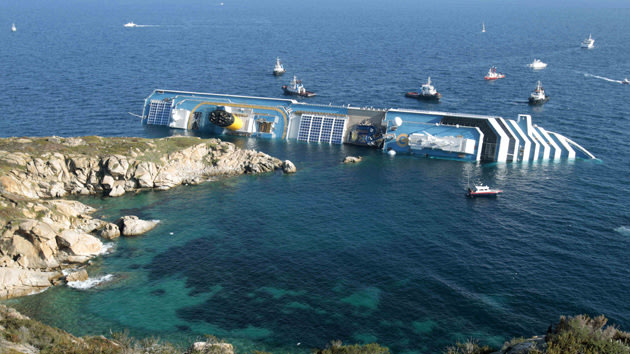
What's the Christian response to technological disasters such as the tragic sinking of the Italian cruise liner over the weekend?
The first thing is to pray—to pray for those unaccounted for, to pray for the families of those who've died, to pray for those who have to wrestle with their part in the tragedy. At these moments, it's wonderful to know there is a God who can bring good out of the worst situations (Genesis 50 v 20).
But the comparisons in the media all weekend between the Costa Concordia and the Titanic—not least the chaos and fighting for the limited places on the lifeboats—points us to another right reaction; one which takes us back long before Leonardo and Kate stood on the prow to the warbling strains of Celine Dion.
Titanic was built at the height of the optimism about man's future, following a century of technological progress, and the civilising of the world. It's "unsinkability" was hailed as part of the optimistic triumph of technology and science to solve the world's problems. It's sinking, and the start of the first world war less than two years later heralded the end of that optimism, and a bleaker view of humanity's chances for the future.
The response of Christians to the sinking at the time dwelled upon these themes. Pulpits thundered with sermons recalling the Tower of Babel, and how God had crushed the hubris of men to reach for the skies. The same message was rehearsed in the haunting classic Blues Song by Blind WIllie Johnson that proclaimed: "God moves on the waters".
It is a message we need to hear again and again. The response of pundits to the Costa Concordia tragedy has been to ask: "How could this possibly happen to a ship equipped with all the modern safety features we can think of". The inevitable response of the enquiries into the sinking will be to recommend further technological developments that will "prevent the same thing happening again".
Who knows. The incredible God-given ingenuity of man may one day give us a world of ships and planes and cars and trains that are completely safe. But our eternal destiny will be completely unsafe if we continue thinking that "we did it". For our God "has scattered the proud in the thoughts of their hearts; he has brought down the mighty from their thrones and exalted those of humble estate" (Luke 1 v 51-52).
I did not see a temple in the city, because the Lord God Almighty and the Lamb are its temple. The city does not need the sun or the moon to shine on it, for the glory of God gives it light, and the Lamb is its lamp. The nations will walk by its light, and the kings of the earth will bring their splendor into it. On no day will its gates ever be shut, for there will be no night there. The glory and honor of the nations will be brought into it. (Revelation 21 v 22-26)

Off the back of the success of singing shows like The Choir, the BBC has announced a major new project for this Easter, called The People's Passion. It's a brand new choral work that can be performed by people across the country at Easter. Schools, existing choirs and those still to be formed in communities or at work can be part of this nationwide premiere - “a moment of national harmony”. It's part of a co-ordinated effort at the BBC to combine drama and music in the week before Easter which will draw people into the Passion story.
This is an opportunity that we would be silly to miss out on. For any church with a few singers and some competent musicians, this represents an open door to make some inroads into your local community. Think big, advertise locally, link up with anyone who likes to sing, and create a gospel opportunity out of it, where the singing is complemented by a Gospel word about the death and resurrection of the Lord Jesus. Because his passion was always to reach out to, and to seek and save the lost.

For many prayer is a challenge in daily life. This insightful, practical book offers powerful motivations to get us back praying, as well as helpful discussions of what to pray for.
Now available at 25% off using the code prayer at checkout.
This offer is valid only in the UK and until 20/1/12

Interesting quote on love from Madonna at the premiere of her new film “W.E”, a biopic of Edward VIII’s lover and then wife, Wallis Simpson:
“This movie shows that there is no such thing as perfect love, that all love requires compromise or sacrifice”.
“This IS love: not that we loved God, but that he loved us and sent his Son as an atoning sacrifice for our sins” (1 John 4 v 10).
In other words—there is such a thing as perfect love. It requires infinite sacrifice, and insists on no compromise. It saw the Son of God come into the world and die on a tree, refusing to compromise and come down from the cross, ignoring those who told him not to bother, insisting on staying there as a sacrifice, our sacrifice, sacrificing all he had and was in order to give us all he has and is.
The cross shows us that there IS such a thing as perfect love.
The question: what project are you working on now for release later in 2012, that you’re particularly excited about?
The answers:

Tim Thornborough, Editorial Director:
I've loved working with Tim Chester and Steve Timmis (and a few friends) on the titles in the Gospel Centred series. They are punchy, pithy and powerful resources that stimulate radical thinking and real change in the way people live their Christian lives.
That's why I'm extra excited at the new title we are working with Steve Timmis on Gospel Centred Leadership. Steve’s learned about leadership the hard way, and often at great personal cost to himself and his family. But out of it has grown a refreshing view of leadership that avoids the traps of the management-inspired "how to" books that seem to fill the bookshelves, and gets back to Gospel basics, and applies to all leaders, from Sunday school teachers to archbishops… I'm learning a huge amount in editing it.
Carl Laferton, Senior Editor:
Promises Kept is a nine-session race through the Bible story coming out in the Good Book Guide range in June. In each session, as well as focusing on a promise of God arising from a period of Old Testament history, we fast-forward to Jesus and to see how He fulfilled that promise. I’m hoping it’ll give small groups a handle on the story of the Bible—which is, after all, our story too; and excite Christians about their amazing, promise-keeping God and about living for His amazing, promise-fulfilling Son.

Alison Mitchell, Children’s Editor:
Christianity Explored Universal (May 2012) is designed to present the gospel message in clear, simple English. A series of Bible studies discovering the life of Jesus through Mark's Gospel, I’m excited about the course because it’s ideal for non-booky people or people with English as a second language, who might find other courses too wordy or complex.
Martin Cole, Youth Editor:
I am always most excited about the next issue of Engage. The issue I'm working on right now (due to come out in the summer) is ambitiously tackling Ezekiel at length, really encouraging readers to get stuck into a difficult but powerful book. There's also diverse and fascinating articles on church, self-harm and eating disorders and the meaning of life. Having said that, I'm now getting excited about writing stuff on Job and Proverbs for the following issue!
Anne Woodcock, Staff Editor:
Close Encounters—our next four-week, evangelistic DVD and Bible-study course (following Tales of the Unexpected), about Jesus and people who he met and helped—is coming out in the spring, and I'm really excited about it because it builds up into a brilliant portrait of the only One who can rescue us from sin, Satan, sickness and death. Plus, it's designed to help all sorts of people, not just well-educated, churchy ones who already know quite a lot of Bible.
Elizabeth Parsons, Translations Co-ordinator:
The Portuguese version of Christianity Explored, which will be the first translation based on the new and brilliant third edition of the course. It’s really exciting to see the course being used in so many different nations and countries, and a privilege to be involved in getting it to so many