Evangelical leader, pastor, mentor, evangelist and writer John Stott died peacefully at a retirement home aged 90 yesterday. I heard the news from a lifelong friend of Dr Stott, who was affectionately known as "Uncle John" to his many friends. Philip wrote:
My dear friend (and perhaps yours, too) died this afternoon at 3.15. He passed peacefully into the presence of his Lord and Saviour whom he served so joyfully and effectively throughout his life.
Frances Whitehead, his niece Caroline and her daughter - Emily, his former study assistant, Matthew Smith, his fiancé - Eia and I were with him. There was no apparent pain and no famous last words. He died at peace both without and within. Rico Tice from All Souls church had visited him in the morning. Shortly before he died we read 2 Timothy and 4:6-8 seemed particularly applicable.
There will be obituaries in the main papers and a memorial service at St Paul’s Cathedral (eventually).
I will miss him very much – he taught me to love and follow Jesus Christ by his life as much as in his writings.
I thought you would like to know as soon as possible, so please forgive this for not being more personal.
‘The Lord gave, and the Lord has taken away; blessed be the name of the Lord’.
John Stott stands as a towering figure over the history and growth of evangelicalism in the second half of the 20th Century. You can read more about his influence and life in detail on the Christianity Today obituary here.
As a measure of his influence, he was voted among the top 100 influential people in the world by a Time magazine article in April 2005. And his influence is everywhere in a whole generation of evangelicals who grew up devouring his carefully written and researched books, and benefitting from his humble pastoral mentoring and prayers.
Other tributes to Dr Stott include:
"The evangelical world has lost one of its greatest spokesmen, and I have lost one of my close personal friends and advisors. I look forward to seeing him again when I go to Heaven." Billy Graham
"It will not be possible to write the history of the church in the 20th century without reference to John Stott. His remarkable ministry spanned the whole of the second half of the century and even in his eighties he was making an impact on the 21st. His leadership of the evangelical movement, both in the Anglican Communion and in wider inter-denominational settings, was a major factor in moving it from rather narrow-minded fundamentalism after the Second World War, to the fastest growing part of world Christianity that it is today. The list of movements and institutions he founded, fostered and strengthened can be read in the biographical pages of this website. His books have challenged and nourished millions of Christians into a balanced and thinking biblical faith. His legacy through the global impact of the Langham Partnership International and the London Institute of Contemporary Christianity is incalculable.
For the vast majority of people whose lives he influenced profoundly, however, he was simply ‘Uncle John’ – a much loved friend, correspondent, and brother, to whose prayers we will never know how much we owe. Like Moses, he was one of the greatest leaders God has given to his people, and yet at the same time, one of the humblest men on the face of the earth. He was, for all of us who knew him, a walking embodiment of the simple beauty of Jesus, whom he loved above all else.". Chris Wright, Langham Partnership International Director
Personally, I have been hugely shaped as a Christian disciple by both Basic Christianity and The Cross of Christ.
Other obituaries can be found here:
http://www.christianitytoday.com/ct/2011/julyweb-only/john-stott-obit.html
http://www.nytimes.com/2011/07/28/world/europe/28stott.html
http://www.tributes.com/show/John-Stott-92007699
http://barrycooper.com/2011/07/27/uncle-john/

"A Christian fundamentalist with right-wing views."
This is how police described Anders Behring Breivik, the bomber and gunman responsible for the appalling tragedy in Norway this last weekend.
I suspect I am not alone in shuddering at the way this title links an act of cold-blooded murder with the Prince of Peace. Perhaps the confusion comes from the fact that political parties described as "Christian" in continental Europe, often now have a very tenuous connection with living faith and belief. The Christian Democratic party in Norway for example (the KrF) is supported by some muslims and secularists because of its stance on headline issues such as abortion and gay marriage. But the rule that party officers must sign a declaration of their Christian faith has come under increasing pressure to be removed in recent years. Sadly, the word "Christian" has become synonymous with "right wing" in many parts of European politics.
So just to get it straight. There is no-one who is a follower of Jesus Christ who could claim that these acts of terrorism are in any way consistent with the teaching and example of Jesus of Nazareth. Jesus calls us to lay down our own lives, not those of others (1 John 3:16). He calls us to live in peace (2 Corinthians 13:11). He calls us to let God be the judge, not us (Luke 6:37). He calls us to love not hate (Galatians 6:10).
Join me in praying for the distressed and bereaved in Norway at this time. Join me in trying to live out His life of love and self giving. Join me in trying to change the world with the word of the gospel, not with bullets and bombs.

Nb. For our international readers; please see this report about the ticketing for the London 2012 Olympics and the mild debacle that it became.
Did you get any Olympic tickets? Did you even try? As a sports fan, I was so excited when London was awarded the Olympics. I’d never thought I could go to the Olympics – and now I could. Wonderful! I jumped through all the hoops – applied for a wide range of sports to increase my options – and waited with anticipation. There was a false dawn when some money was taken from my account that would have been the exact amount for several tickets. Yes, I thought, I’ve definitely got something. But it turned out to be my council tax. More waiting… and waiting… until, eventually, the email that started “We are sorry…”. I was gutted.
A few weeks later, the whole saga started again. This time I set my alarm for 5.45am, so that I could sign in and apply on the dot of 6.00. My application was finished at 6.03am – yes! … No … “We are having processing difficulties…” Round and round the circuit I went – apply / deny / apply / deny – ugh! Eventually the application was accepted – but that didn’t mean tickets, just that they’d received my request. “You’ll hear for certain in 12-24 hours” – oh, no I didn’t. Aagh! Then eventually, when I’d given up hope, another email: “We’re delighted to tell you…”. Phew! I’ve got one. Just one solitary ticket, (and even that was dependent on them successfully taking the payment from my account), but I now know how lucky I am to be going at all.
The whole process was exhausting, frustrating and an emotional roller-coaster. But it also got me thinking. The worst thing about the Olympics process was the not knowing. The uncertainty, coupled with the disappointment of hopes dashed, was crushing. And in the end I had to tell myself I was delighted with something that’s far less than I originally hoped for. In contrast – how wonderful the gospel message is. We’re not left hanging around waiting. The outcome is based on the finished work of Christ, not the vagaries of a lottery. And the glittering prize won’t lose it’s glow as we get closer to it – instead it will prove to be far more wonderful than we can ever imagine. I’m still quite excited about my single Olympic ticket – but I’m thrilled to the bottom of my soul by the prize I have through Christ my Lord.

The talk and posturing over the place of evangelicals in the Church of England seems to have been endless. But after a few false dawns, a significant step towards an alternative oversight system for confessing evangelicals has been announced here.
The Anglican Mission in England (AMIE) held its inaugural event last wednesday at the Evangelical Ministers Assembly in London, and a new office will be opened in central London for the organisation which will be overseen by a number of bishops, from the UK and overseas.
Update: Rev Richard Perkins writes with some helpful explanation of what the AMIE means in practice.

Terry Pratchett’s BBC documentary on the BBC last night will no doubt reignite the long-rumbling euthanasia debate. What to make of it as Christians? This is the first of a few blogs we’re going to run on the issue.
Few people are scared of death itself:
But many of us, if we are honest, are afraid of the whole process of dying. The thought of a failing body, the potential for pain, the possibility of not quite being ourselves, leaves us profoundly disquieted.
As human beings we tend to want to make pain go away—so it shouldn’t come as a great surprise that there are plenty of people who want to control the dying process. There is something deeply appealing about knowing that it’s not going to hurt too much, or take too long.
The trouble is, we can only take control of the dying process if we are first willing to dump the Lord of life and death (Matthew 10:29-31): To take a life (including our own) means ignoring the God who says “don’t kill” (Exodus 20:13).
It involves denying that there is something intrinsically special about being in the “image of God” (Genesis 1:27, 9:4-6). And it must mean forgetting that God, who knit us together in our mother’s womb, has a plan for each day of our life and is intimately involved in sustaining us through those days—no matter how hard—until He takes us home at the best moment, the moment of His choosing (Psalm 139).
As with all ethical issues, we need first to get a right view of who God is and what He says; and then allow ourselves and our opinions to be directed by that view.
Last night’s programme on the BBC will no doubt reignite the long-rumbling euthanasia debate. And in the face of that Christians have a double responsibility:
But at the core of both those activities lies a Christian’s ultimate responsibility—to tell the world that God is good, and He is sovereign. And that rather than dumping Him, the best response is to follow him, trusting Him for the power to persevere in this life and to bring us to pain-free perfection in the next.

Bosnian Serb warlord Ratko Mladic’s arrest yesterday in some ways closes a chapter in the bloodiest episode in post-war Europe. He’s off to the Hague to face justice. And one word we won’t, understandably, hear much is “forgiveness”.
Which prompted me to think of one of the most provocatively-titled books we stock: “Forgiving Hitler”. It’s by a Jewish lady who suffered terribly during the Holocaust, but since discovering Jesus as her Christ found herself able to forgive those who’d wronged her.
Three reasons to grab a copy:
You can buy it here.
It comes around about every dozen or so years, and the story is the same:
These guys are great at waving their Bibles around, and playing endlessly with their calculators.
Camping is reported on the BBC website here as saying: "I'm not a genius, and I pray all the time for wisdom". What a shame he didn't wisely turn to Mark 13 v 32 and discover that he was claiming knowledge that even the angels and the Lord Jesus are not party to.
How can we respond to this in conversations with others?... continue reading
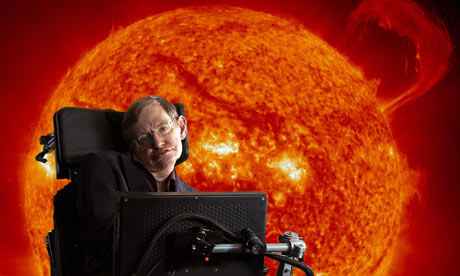
Stephen Hawking has announced that heaven “is a fairy story for people afraid of the dark”. And, because he’s a scientist, he’s allowed to make unscientific statements of belief and present them as virtual fact.
What’s worth doing is to pick out the unscientific assumptions in any statement a scientist makes when they talk about faith (whether they’re pro-faith or not).
Here’s what Professor Hawking said in his interview, complete with an “assumption alarm”:
“I regard the brain as a computer… (ASSUMPTION: just because we know a little of how the brain works, doesn’t mean it is merely an organic computer…)
“which will stop working when its components fail. There is no heaven or afterlife for broken down computers… (ASSUMPTION: the unspoken beliefs here are that a human is nothing more than a brain with a body round it, and that a brain cannot be restarted when it “breaks down”…)
"that is a fairy story for people afraid of the dark (ASSUMPTION: just because the thought of heaven is comforting to those who fear death, doesn’t mean it’s not actually true…).
“The universe is governed by science… (ASSUMPTION: science can’t prove that scientific laws are impersonal and happen to be as they are, rather than the way in which a personal Creator has decided to make and run a universe…).
“[Because we happen to be here] we should seek the greatest value of our action… (ASSUMPTION: this assumes that we know what all the consequences of an action would be, and that we can agree on what the greatest value of an particular action is. This is a moral question, which can’t be answered by scientific endeavour).”
If you’d like to see a useful answer on why science hasn’t disproved Christianity (including the idea of heaven), have a watch of this.

Over a thousand people went to Bible by the Beach on the south coast last weekend.
If you’ve not been (or not heard of it before), it’s a great few days in Eastbourne: top-notch Bible teaching, a great variety of stuff happening, plenty of chance to relax, and of course fantastic singing with a choir of a thousand. And children love the programme that's provided for them (see pic).
It's also very good value-for-money: though unfortunately the budget doesn't stretch to warming up the English Channel for swimming…
May Bank Holiday 2012: Bible. Beach. Brilliant.
Dear Friends,
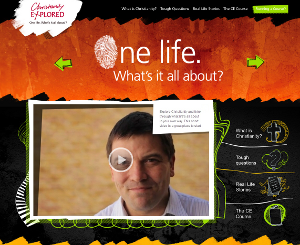
I'm thrilled to announce the launch of a new website designed specifically for anyone investigating the Christian faith. After many months of hard work by the CE team and our friends at The Good Book Company, the all-new www.christianityexplored.org is now up and running.
The idea is for this site to be a welcoming, unpressured and jargon-free place for people to explore the Christian faith. It is packed with answers to tough questions as well as some wonderfully engaging real-life stories of people who have come to faith in Christ Jesus. There is an animated presentation of the gospel and some info on the Christianity Explored course as well as a powerful 'find a course' feature so that we can point people to churches local to them which are running a CE course.
I'd be be delighted if you'd have a look at the site and if you like it, forward the link on to others who you think may be interested. Why not link to it from your church website or post it on your Facebook page? The beauty is that it is suitable for anyone and everyone to visit, regardless of how they would describe themselves spiritually.
And of course if you run Christianity Explored, please make sure that your church is registered on our database so that we can point visitors to you. You can register your course here on our new site for leaders - www.ceministries.org.
As with all of the resources we and The Good Book Company produce together, we are praying that these will be useful to you as you share the great news of the gospel with those around you.
Yours in Christ,
Rico Tice