
The story about doctors giving abortions on the basis of gender, “no questions asked”, must be one of the saddest news items of recent years. Let’s be thankful it has come to light, and is being dealt with.
But there’s something illogical about the outcry, too. If an unborn baby girl has the right to life, then surely surely any unborn baby does—whether the sex is known or not, whether the baby is a girl or a boy.
It seems strange to accept you can terminate because you are upset at the prospect of having a baby—but not because you are upset at the prospect of having a baby who happens to be a girl.
And just another thought… in the UK you can opt to find out the gender of your child when he/she is 20 weeks old. You can opt to terminate a pregnancy up to 24 weeks. Which means you can easily abort a girl you don’t want—you simply have to say it’s for social reasons, not sexist ones.
Let’s pray that this news story means no baby loses their life ever again in the UK simply because they’re of an unwanted gender. But let’s also pray that no baby loses their life again in the UK for any other reason. And let’s pray that women, and men, who find themselves in difficult, unplanned situations receive the help and love they need—and that women, and men, who look back at difficult decisions they wouldn’t take now accept and appreciate the forgiveness that Jesus offers all of us.
For some more in depth biblical reflection on the issue of abortion, scroll down a few blogs and see last week's series ...
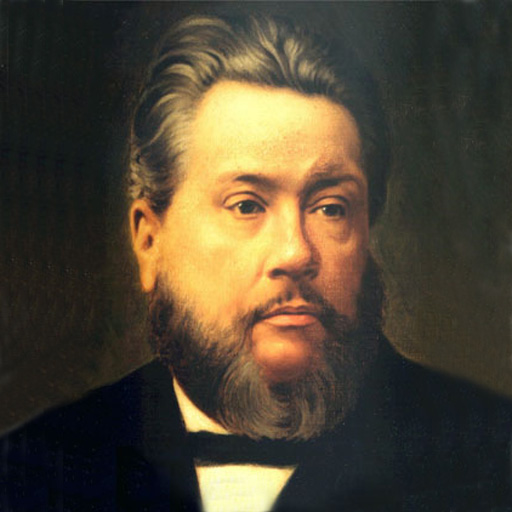
I heard this at a prayer meeting recently:
“There is no such thing as a great man or woman of God. There is only a man or woman – and a great God.”
Do you agree?
I guess many of us would think of C.H. Spurgeon as a great man of God. But I don’t think he’d agree. Here’s a fantastic Spurgeon quote I was sent last week. He puts the emphasis and glory exactly where it ought to be.
“Consider what you owe to his power; how he has raised you from your death in sin; how he has preserved your spiritual life; how he has kept you from falling; and how, though a thousand enemies have beset your path, you have been able to hold on your way. Consider what you owe to his immutability. Though you have changed a thousand times, he has not changed once.”

There will be many Christians with very full stomachs this evening. A significant number of frying pans with burn marks. And more than a few ceilings sporting the odd stalactite of half-cooked batter, casualties of the inevitable over-enthusiastic pancake-toss. But once the eating and cleaning has been completed, many believers will be turning their minds to a highly tricky question: what on earth should we do about Lent?
Evangelicals have a strange relationship with these 40 or so days of the Christian calendar. It's not that we object to the concepts of sacrifice or fasting or repentance. Nor that we mind giving up a few things. But many of us worry about the half-hearted candy-related resolutions that all too often get made at this time of year just out of tradition. While giving up chocolate might have benefits for some people's waistline, and if the money saved is given to charity then good work in the world can result, is this really what God wants of us? Isn't it true that an outward show of sacrifice, if not accompanied by an inner change of heart, is quite frankly very far from God's will for his people? So how to respond?
Isaiah had this to say to believers who were involved in tokenism in their fasting:
"Is not this the kind of fasting I have chosen: to loose the chains of injustice, and untie the cords of the yoke, to set the oppressed free, and break every yoke? Is it not to share your food with the hungry and to provide the poor wanderer with shelter - when you see the naked, to clothe him, and not to turn away from your own flesh and blood?" Is 58:6-7
We live in a world where millions are in physical bondage to tyrants and spiritual bondage to the devil; a world where many have no idea where their next meal is coming from and are ignorant of the awesome gift of the bread of life; a world where countless numbers have no roof over their head and no understanding of the eternal God, the ultimate rock and refuge for those who turn to him. Spending Lent prayerfully and proactively addressing some of those needs might just make the post-pancake period of 2012 rather more gospel-centred than it might otherwise be.
Another great visual representation of gospel truth from Tim Challies. This time, it's Philippians 4:8 (with a spot of Greek thrown in!):

When God gives any man wealth and possessions, and enables him to enjoy them, to accept his lot and be happy in his work—this is a gift of God. He seldom reflects on the days of his life, because God keeps him occupied with gladness of heart.
(Ecclesiastes 5 v 19–20)
It is when we learn to trust God, and so be accepting of what He has (and hasn't!) given us, that we find true, lasting satisfaction. Such a life is free from anxiety, even about the shortness of life, because of gladness in what God has given.

Christians wanting to follow Biblical principles when they clash with UK law are like Muslims wanting to live under Sharia law. That's what Trevor Phillips, the chairman of the Equality and Human Rights Commission, has said.
Is he right? Yes ... and no!
His assumption is that the legal system of a country defines what "right" and "wrong" is—and every single religious principle has to give way to it. And in a democracy like Britain's, that sounds very persuasive. After all, the law reflects the will of the people who elect their representatives to Parliament to make the laws. But the trouble is, that's what happened in Genesis 3. God had said "Don't eat from the one tree". But the will of the people (by a unanimous decision) was: "We think it's right to eat from the tree". Right and wrong, when decided on by humans who then tell God when and where he will be obeyed, is called sin.
Mr Phillips has hit upon one important point, however — sometimes Biblical commands, Koranic/sharia laws, and our increasingly-secular legal system, clash. They can't just rub along together.
So the question becomes: who knows best? If it's Allah, let's go for sharia, quickly and uncompromisingly. If it's the British people (who, bear in mind, once thought Sven Goran Eriksson was a good manager, and more seriously once thought slavery was a good idea), then let's do as Mr Phillips asks and leave our Christian principles "at the door of the temple" (presumably by temple he means "building where a church meets").
If, though, Jesus has risen and so is the creating, reigning, all-knowing God… then we must live under His loving, perfect rule. That means obeying the law of the land, even when we disagree personally with it or it annoys us (speed limits included), because His word tells us to (Romans 13 v 1-7). But it also means that when there is a clash between Jesus' command and the state's, we obey Jesus—whatever the cost.
Throughout history, God's people have had to "choose between their religion and obeying the law". Around the world, our brothers and sisters are being physically persecuted for choosing their religion when God's word opposes their country's law. Let's thank God for them; for men like Peter and John (Acts 4) and Daniel (Daniel 5).
And let's ask God to make us like them. It looks like there are going to be more and more opportunities to be people who "suffer according to God's will … commit themselves to their faithful Creator and continue to do good" (1 Peter 4 v 19).

After the success of our Warehouse open day last Saturday, today we're offering our top offer of the day to all customers!
The old versions of the two Christianity Explored paperback books (Christianity Explored and If you could ask God one question) are now available at £1 each or 20 for £10.
Offer expires on 23/02/2012.

“How long will you defend the unjust and show partiality to the wicked? Defend the cause of the weak and fatherless; maintain the rights of the poor and oppressed. Rescue the weak and needy; deliver them from the hand of the wicked.” Psalm 82:2–4
At the heart of the Christian life is the call to “defend the cause of the weak.” When a mother makes the difficult decision to end the pregnancy, the child is desperately vulnerable. Babies cannot speak for themselves. Fathers don’t have any legal rights.
In the New Testament, the parable of the Good Samaritan shows us that Jesus really does care how we respond to those in need around us. The unborn are our neighbours and God’s people should not just walk past but try to love them.
Some of what we can do revolves around supporting individuals who are struggling (as we saw yesterday) but there is also much we can do to challenge our society that accepts abortion so regularly.
Changing our language
Many people choose abortion because they are unsure how to think of the unborn, and the language we use can demonstrate what we think. For example, I was 44 and nine months old last birthday. I was alive 9 months before I was born! I usually think of myself as one of two children, but if my mother miscarried, I’m actually one of three! Miscarriages and stillbirths are properly occasions for grief at the loss of human life, not simply a loss of “what might have been.” Our language can reflect these convictions about unborn life and perhaps provoke thought.
Changing public opinion
A more significant response is to join the effort to raise the debate and change the law. Opinions are formed in parliament and in the press, and Christians need to be willing to speak loudly and clearly for the unborn, without sounding unloving or judgemental towards the mothers concerned. When a woman is pregnant, there are two human lives who need compassionate care, not just one. We love the mothers most if we help them see what abortion is, and make it easier to do the right thing, and harder to do the wrong, with as much support as we can arrange. We need to say this – in letters, on TV, in parliament, on the internet, in any place we can find. The Christian Institute is one organisation that provides reliable briefings and practical ways to affect public opinion. Get their emails, and act on them! It’s often only a five minute job.
200 years ago Wilberforce and his allies were used by God radically to change a culture which approved of slavery. Abortion is more common than slavery was and even more serious.
God could use his people again. Pastors and people alike must keep caring most about heaven and hell, and about the gospel, But can we also, by God’s grace, also care enough about these parents and their unborn children to begin to act on their behalf?
Will we begin working and, far more importantly, praying for a change in our society?
Andrew Nicholls is the pastor of Christ Church, Kingston. Before moving into full time ministry, he was a doctor.

Churches can also make a huge difference to women facing a crisis pregnancy. But what does that look like? How can God’s people actually make a difference to people in these situations who might consider abortion as the way to solve their problem?
Supporting those known to the local church
Being pregnant is scary, and especially when there is no-one obvious committed to helping you cope. Women can feel lonely and/or afraid, and abortion can feel to some like it solves the problem with out much fuss. When someone in a “crisis pregnancy” is already known to a member of a church, we can find out what sort of help is needed and to try to provide it from within the church family. This often happens naturally, as pregnant women rightly attract sympathy and generosity. Baby equipment, meals, taking other children to give Mum a break, accompanying to ante-natal appointments, help in battling through the social security system or time spent chatting over a cup of tea all can help a woman feel she is not alone, and reduce the fear associated with childbirth and parenting. What once seemed impossible now feels hard but perhaps survivable. We sometimes take it for granted in the church family but for someone outside this sense of connectedness can be literally life-changing.
Supporting those unknown to the local church
The trickier people to reach are those women whose pregnancy the church never hears about but who go in their thousands every year to have an abortion. How can a church begin to care for those women and their children?
One idea, which by God’s grace has borne fruit in our church and in many others is a Crisis Pregnancy Centre. Trained counsellors offer time to listen and talk through all the options available to a woman in a crisis pregnancy. They give accurate information about what abortion involves, how it is done, and what the consequences might be. They discuss giving the baby for adoption, and keeping the baby long term. They listen to the factors bearing on a woman’s decision, and offer empathy and understanding. In some centres, the focus is on helping the woman explore her own feelings and instincts, while others provide clearer advice about how to proceed so as to protect the new life entrusted to her. Counsellors can help her think properly about the decision, and offer whatever help she may feel she needs in order to see continuing with the pregnancy as a viable option for her.
In all centres, clients can be anonymously prayed for, and there can sometimes be precious opportunities to share the Christian good news that is the most wonderful resource we can offer.
The centre is advertised as widely as possible – for example, to local GPs, abortion providers, family planning clinics, local radio and press, on hoardings and, of course, on the internet. Affiliation to a national network can provide a share of their internet presence and telephone contacts, as well as training, mentoring and support to get started and keep going. Nearly 200 centres already operate in the UK, many through affiliation with Care Confidential. Image in Manchester or Tyneside Pregnancy Advice Centre are other good points of contact.
Could your church start one? By God’s grace, ours did!
Andrew Nicholls is the pastor of Christ Church, Kingston. Before moving into full time ministry, he was a doctor.