What effect would persecution have on your evangelism?
For the last few days I’ve had the privilege of spending some time with a Christian who lives in one of those countries where Christians are persecuted, and where there is political upheaval and significant unrest. It’s a life so dangerous that very few people know who they are or where they come from.
But what they said is worth being made public.
I asked them how discrimination and the risk of violence affect their mission and ministry. They smiled and said something that will stick with me for years.
“It changes nothing.”
Which is a great challenge to those of us in the West. There is no such thing as being in a situation where it is OK to give up serving. No context is a “get out of mission free” card. If our speaking about Christ produces laughter, derision and scorn; if our living for Christ means we lose out at work, in relationships or with our family; “it changes nothing.”
“For we are God’s workmanship, created in Christ Jesus to do good works, which God prepared in advance for us to do” (Ephesians 2 v 10).
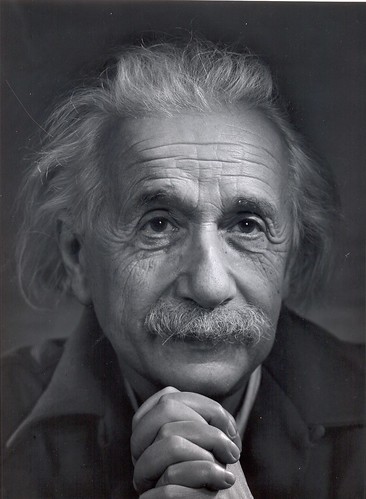
Albert Einstein probably wasn’t thinking about the gospel of Jesus Christ when he said this, but it’s a great reminder for Christians who teach the Bible to adults or children, or who are trying to tell people the gospel message (in other words, all Christians!):
“If you can’t explain it simply, you don’t understand it well enough.”

…happiness, as the Chinese are finding, according to this report in the Guardian.
It’s interesting that this should come at the same time as the Government in this country is beginning tentatively to suggest that happiness is not inextricably linked to economic wealth; that (shock! horror!) you can be rich and sad, and poor and content.
The article on China suggests that the reason is an imbalance in wealth within the country; that although everyone has been getting wealthier, some have been getting much more wealthy than others: “Across China, people have rediscovered the well-rehearsed truth that material satisfaction is relative.”
I wasn’t aware that this was a “well-rehearsed truth”, although coveting something that isn’t yours, instead of enjoying what is, has been a problem since the Garden of Eden. Just ask Zacchaeus whether being the richest guy in town makes you happy.
If only there were a way to escape this view that everything comes down to material wealth. If only there were a “secret of being content in any and every situation … whether living in plenty or in want” (Philippians 4 v 12).
Paul knew the secret. It was to be able to say, and mean, that “for me, to live is Christ and to die is gain” (Philippians 1 v 21).
I’m not good at really meaning that. But I can see that, if I really lived that out, it wouldn’t matter at all to me whether I was “rich”, “poor”, or “poorer than them, but richer than them”.
Wonderfully, the church in China is growing at a stupendous rate, with thousands meeting the Christ who gives contentment each day. Perhaps that huge nation will start getting happier after all…

It’s that time of year. Someone always asks: “What are you giving up for Lent?”
My usual answer is “nothing”. I don’t tend to do that kind of thing. But this year, the question has got me thinking. It has got me wondering whether maybe I’ve given up too much already and that my challenge for the next few weeks is to give up giving up…
So no giving up sweets or ice-cream (which remain very much at the centre of my diet!) But I’m becoming increasingly conscious that I’ve already given up too much of what is really important.
Like the first-century Christians found at Laodicea, it’s so easy to let passion for Christ dwindle and become lukewarm (Revelation 3 v 16). Evangelism in the local community; prayer for non-Christian friends who don’t seem like they’ll ever be interested; reading the Bible simply because we can listen to the inspiring words of our friend and Lord; these are the things which can slowly fade out of life.
Yes, there’s no doubt about it. I’ve been giving up on way too much in recent months.
Here’s what I’m doing this Lent. I’ve texted a friend and asked them to pray that I would “never be lacking in zeal, but keep [my] spiritual fervour, serving the Lord” (Romans 12 v 11). I’m giving up giving up.
If you’d like to join me on my hastily-arranged Lent campaign to give up giving up, text a friend that verse now and ask them to pray; and if you like, share what you’re giving up giving up in a comment below. That way, hundreds of people can pray for you… and you for them.

Do you know what, and how, your child is being taught about sex?
The Christian Institute have released a study on what materials primary schools are using in sex eduction: some of its findings might surprise you. If you're a parent, it's worth reading it and praying about it; if you're not a parent, it's worth telling those you know who are.
This post isn't a covert campaign for home schooling, nor a knee-jerk negative reaction to the whole issue of children being educated about sex outside the home. Some of the best, wisest parents I know take very different approaches in how to bring their children up and how and where to educate them.
But this is the kind of thing that we all too often accept unthinkingly rather than prayerfully, simply because everyone around us does. And "sons [and daughters!] are a heritage from the LORD" (Psalm 127 v 3); a gift from Him for us to have the joy of bringing up and telling about Him.
So though five Christian parents might well come to five different conclusions about primary school sex education, hopefully helpful information like this Christian Institute study will make sure that each of those conclusions are the result of careful thought and great prayer.

We're just in the process of coming up with a title for the newest of our Good Book Guide series on Jonah.
It needs to be short. It needs to be catchy, so people notice and are intrigued. It needs to be easily understandable both in the UK, the US and in Australia.
And I'm a bit stuck.
So, how would you sum up the message of the book of Jonah in a short and catchy sentence? Comments below please!
This is a great spoof video, imagining that a Starbucks branch decided to model itself on a church. It's hilarious, but it's also slightly uncomfortable as it makes us see our church with a newcomer's eyes. I have to admit, there's a chance that I might sometimes sound or act just a little bit like some of these people, without really realising it.
Of course the "tragedy" is that that couple just wanted some coffee. And the coffee branch stopped them getting it, and put them off trying again. If you substitute "to know Christ" for "some coffee", it raises the stakes a bit…

I've been trying to help the children at church understand that Jesus is King, and what it means for him to be King of our hearts, time, friendships and even our pocket money, what it looks like to "seek first his kingdom and his righteousness" (Matthew 6 v 33).
It seems they have been listening.
Last Sunday, when it got to that point in the service when the collection bag came round, I put in my usual smattering of coins. I have a standing order to the church bank account, so my weekly cash offering is just a bit on top.
But moments later, two small hands dove into my purse. Two little girls removed a fistful of cash and put it into the velvet pouch we use to collect money for “Jesus’ work”.
“Do you think that’s enough now?” I whispered, hoping to avoid alerting the rest of the congregation to my emerging fiscal crisis. But no, yet more of my money was removed and given to Jesus. Why? Because he is King over all we have.
My stomach knotted. I wanted to chastise them for taking my cash. I needed it to buy cake and to hop on and off buses so I could avoid walking short distances in the cold.
But as the pound coins tumbled, the penny started to drop. I had fallen into the trap of thinking that because I give regularly to the church, I’ve done my bit. I had subconsciously assumed that the rest of my cash could be spent on whatever I liked without any reference to God. Despite teaching on it, I hadn’t really grasped that Jesus is King over everything in my purse.
I did the maths when I got home. The remaining money is more than adequate for my needs. But the missing cash, the stuff that would have gone on meaningless trivia, is now going to gospel-work. And on reflection, that’s pretty exciting (even more exciting than cake!)

Quick quiz - who is this about - fewer points the further down the list you have to go:
Give up? OK maybe the headline gave it away in connection with the leek and the date. It's St David's day today, so our greetings to all you wonderful people of Wales who may be reading this on St David's day.
As with many "saints" what we know of his life is difficult to weed out from the inflated claims that biographers make about their holiness, miracles and influence. But certainly the deathbed saying: "Do the little things", which has entered Welsh folklore as a popular proverb - 'Do the little things in life' ('Gwnewch y pethau bychain mewn bywyd') - is something we can take to heart.
Do we place too much emphasis on the big things we attempt for God - and neglect the power of the small things? A gentle piece of encouragment, a small act of kindness, a text reminding someone you are praying for them, a Bible verse shared, a smile or a greeting to a stranger or a shop assistant. Life is made up for the most part of these little things. And St Dave reminds us that Christ can inhabit each of them.
Books have a great, and often deep and lasting, impact on people who read them. Good Christian books excite, encourage and equip Christians, and help to bring the gospel clearly and engagingly to "not-yet-Christians."
But equally, a “Christian” book which contains mistakes (theological, not spelling!) can divert, damage or even destroy Christians, and leave non-Christians not knowing what the Bible actually teaches.
Which is why a new book by a popular author looks like it needs a large health warning attached.
Rob Bell, the American pastor who produced the extremely popular Nooma videos, and who is a great communicator and writer, has a new book out this spring, called “Love wins”. Great title, but judging by the publicity, its central message is that hell is empty, because ultimately God will save everyone, whether or not they’ve accepted Jesus as their Lord and Saviour.
It’s important to say this is only the publicity: some people have helpfully pointed out it could just be a brilliant marketing strategy (if it is, then it seems unfortunate to use heaven, hell and salvation as sales-boosting tools).
The publicity video is here: and after watching it, do go here for some Bible-based, honest answers to the questions Bell asks.
For what it’s worth, I find that a helpful place to focus is Jesus’ first words in Mark’s gospel (1 v 15), a summary of His central message. However popular or plausible Rob Bell is, it’s Jesus’ words which must provide the benchmark for whether or not we welcome Bell’s book.
“The kingdom of God is near”.
What’s remarkable is not that those who choose to live without God while misusing his gifts endure life beyond death without God and without any gifts (hell).
What’s remarkable is that for people like that (us) the kingdom of God is still near, reachable, open. In reality, this is what it means to say that Love wins.
“Repent and believe the good news”. What’s wonderful is that anyone who simply:
has a guaranteed, unlose-able eternal place in it. Anyone can be won over by Love, and ask Love to win kingdom life for them.
But the Bible teaches clearly that no one is forced to ask God’s Son (Love in human form) to be their Lord and Saviour. No one is forced to go to a heaven they don’t believe in, ruled by a God they don’t like, loved by a Love they don’t want. That wouldn’t be very loving.
Wiser bloggers than me have commented on the publicity for this book: if you want to know more, check out Justin Taylor and Kevin DeYoung.